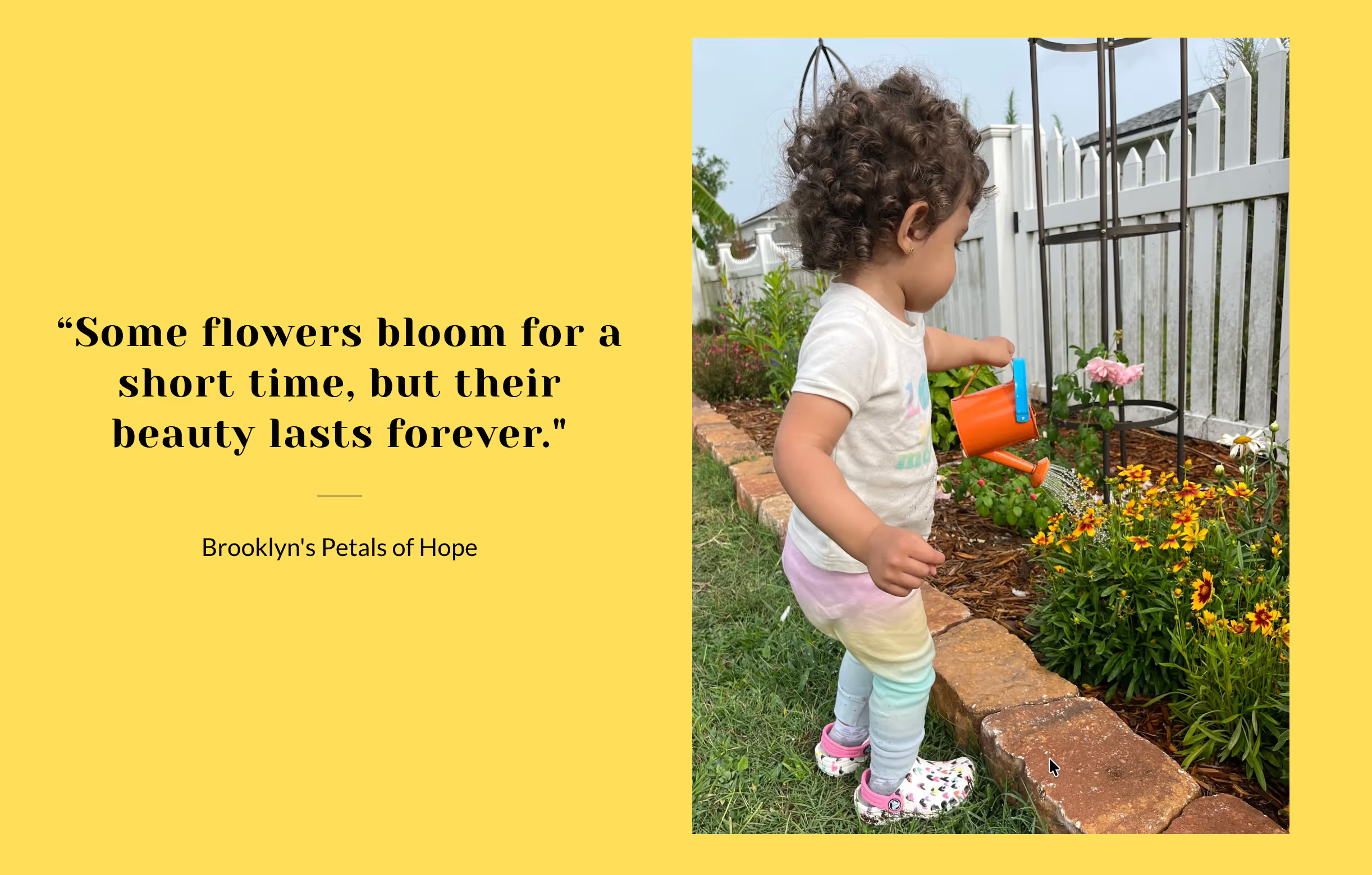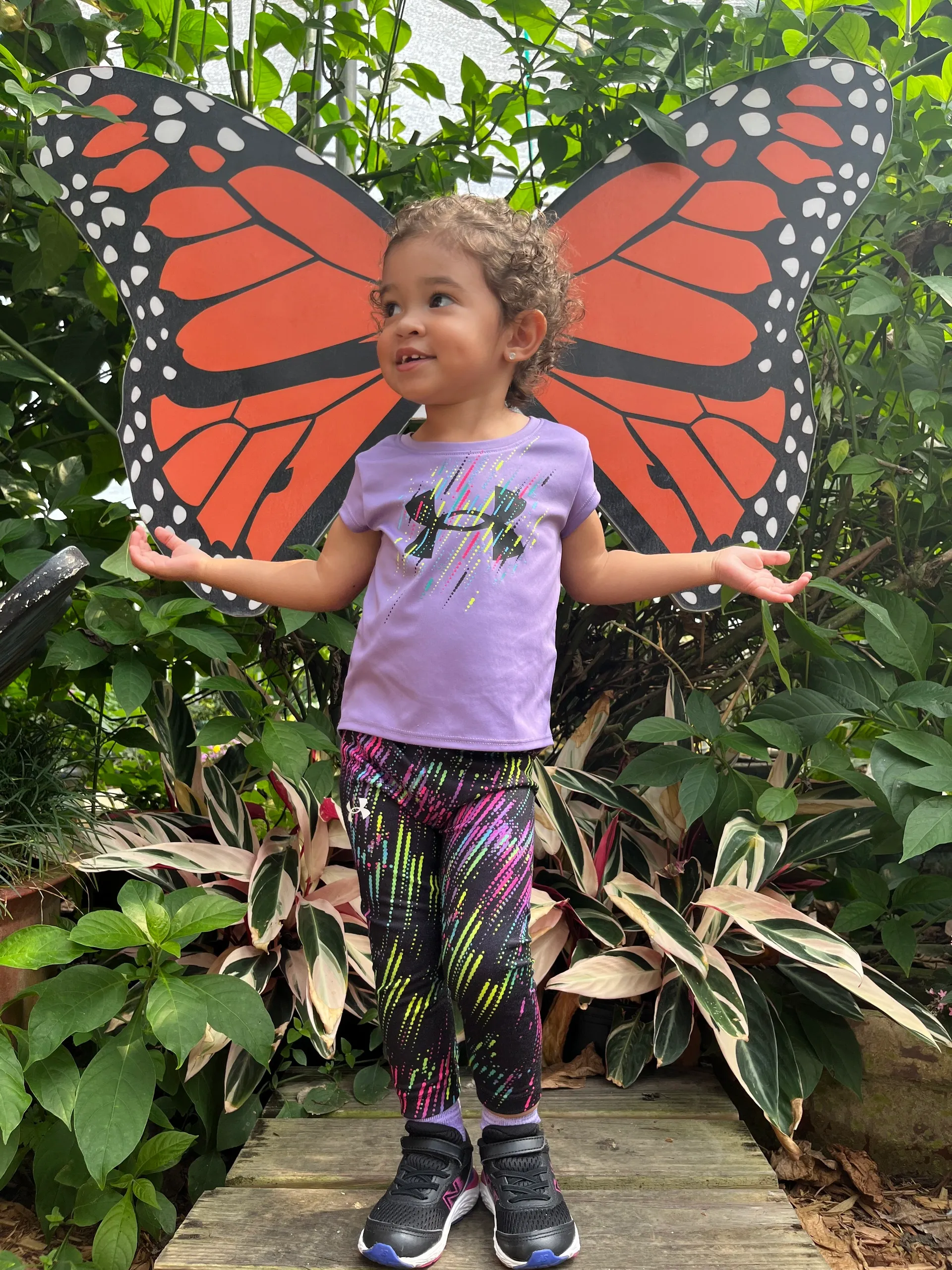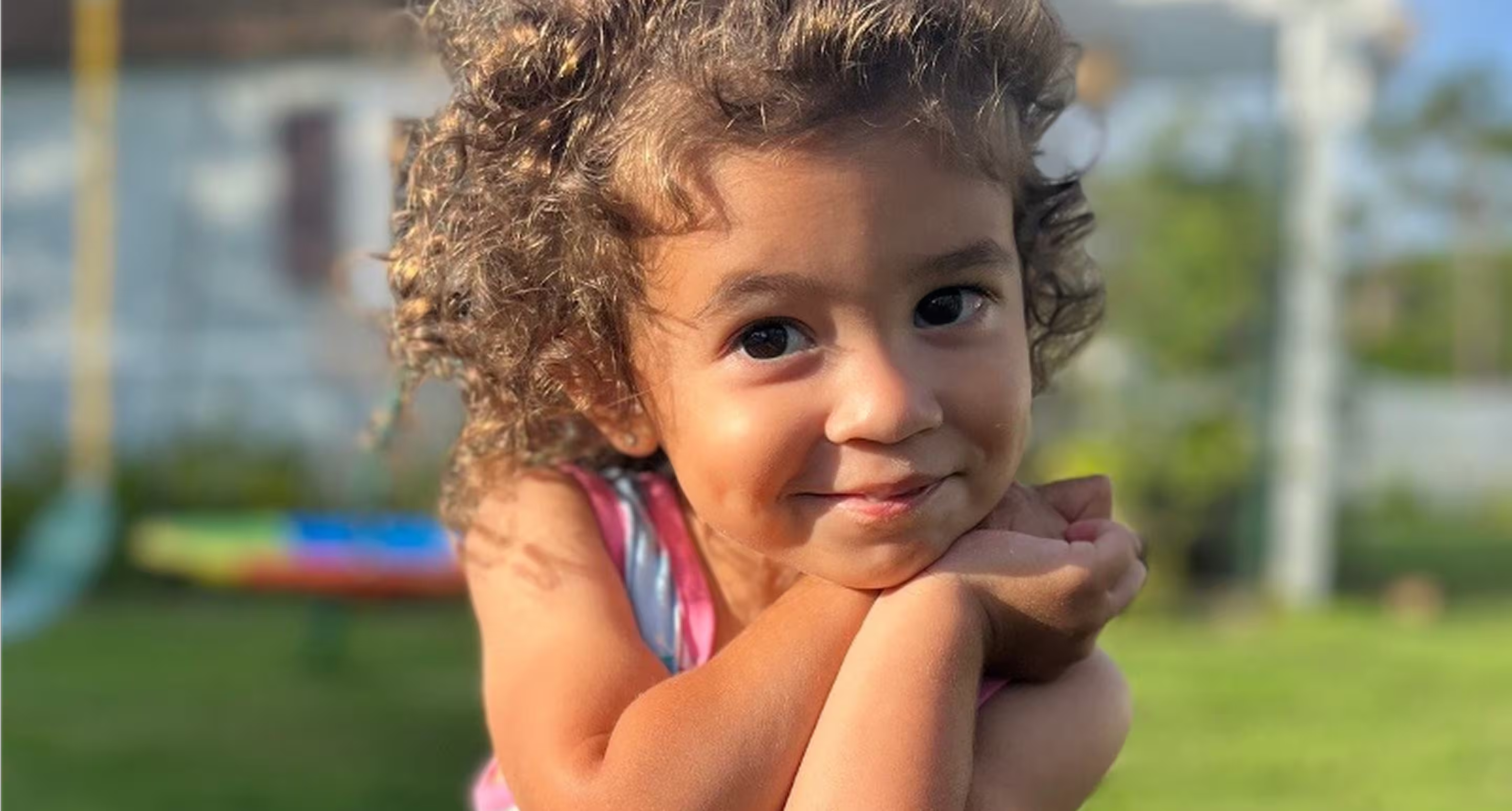
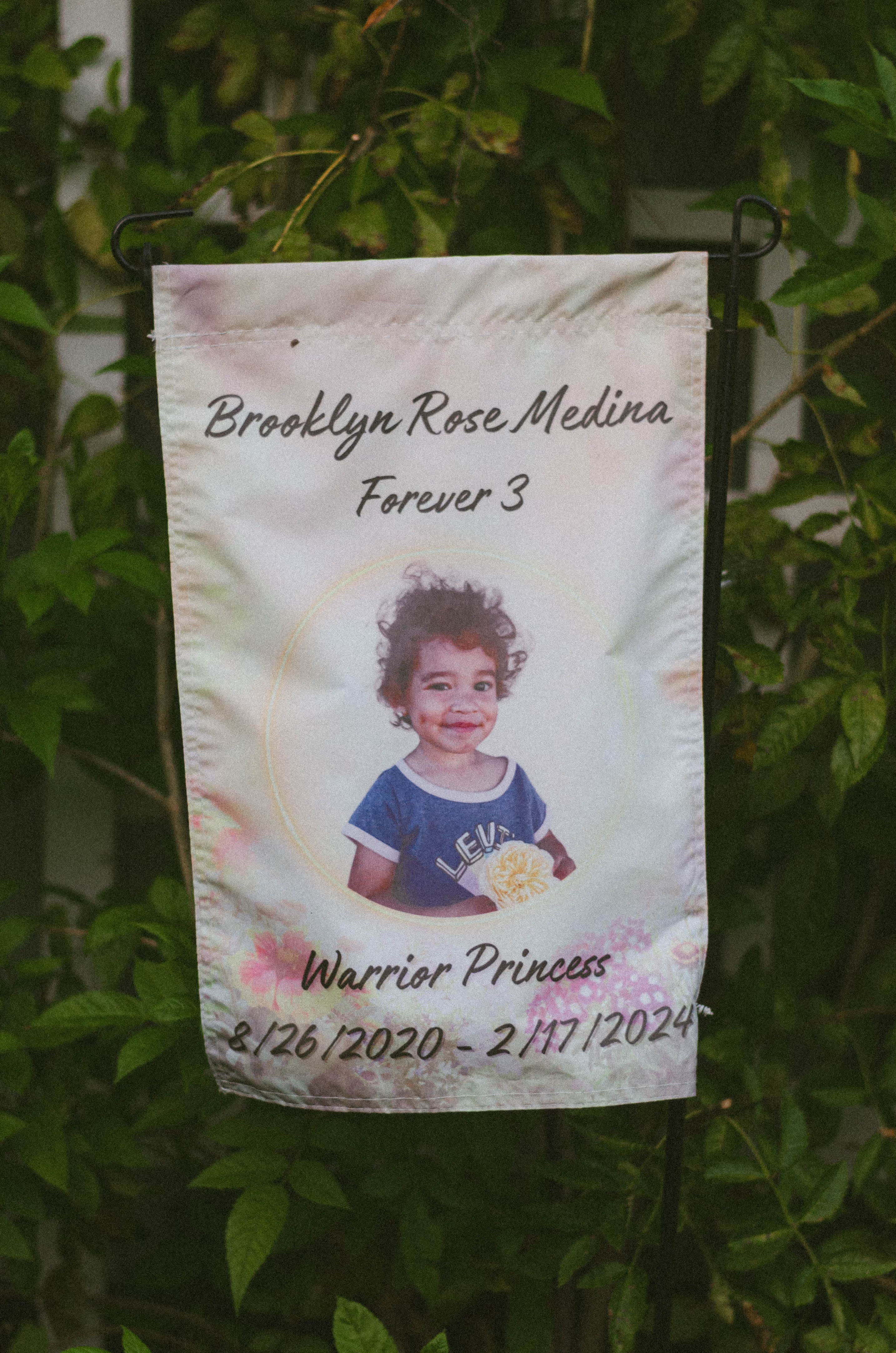
We want to hear Brooklyn's name.
On February 17, 2024, Darline and Anthony Medina lost their three-year-old daughter, Brooklyn, to DIPG (Diffuse Intrinsic Pontine Glioma), the deadliest childhood brain cancer. DIPG has no approved treatment or cure; Brooklyn died just nine months after being diagnosed. In the following conversation, captured during a day spent at the Medina's home, Darline and Anthony remember Brooklyn’s vibrant and courageous spirit, reflect on the many dimensions of grief, and share the journey from diagnosis to life after her passing – including the difficult decisions surrounding clinical trials.
How are you both feeling about today?
I’ve been nervous for this interview. For the longest time, I haven't been able to remember anything before Brooklyn's diagnosis, or even the day we brought her home just after it. But things started coming back yesterday.
Unfortunately, the things that stick with me the most are the hard moments. Like the memories where she's screaming while they're trying to put an IV in. Yesterday I remembered something random and thought, why that?
Exactly. When the memories of her diagnosis day started coming back, I was right back in that daze where I had been thinking, is this even real life? Just a few days earlier I was a regular mom. Suddenly I was a cancer mom. I thought we’d have to worry about boys knocking at the door or saying no to drugs. Not this.
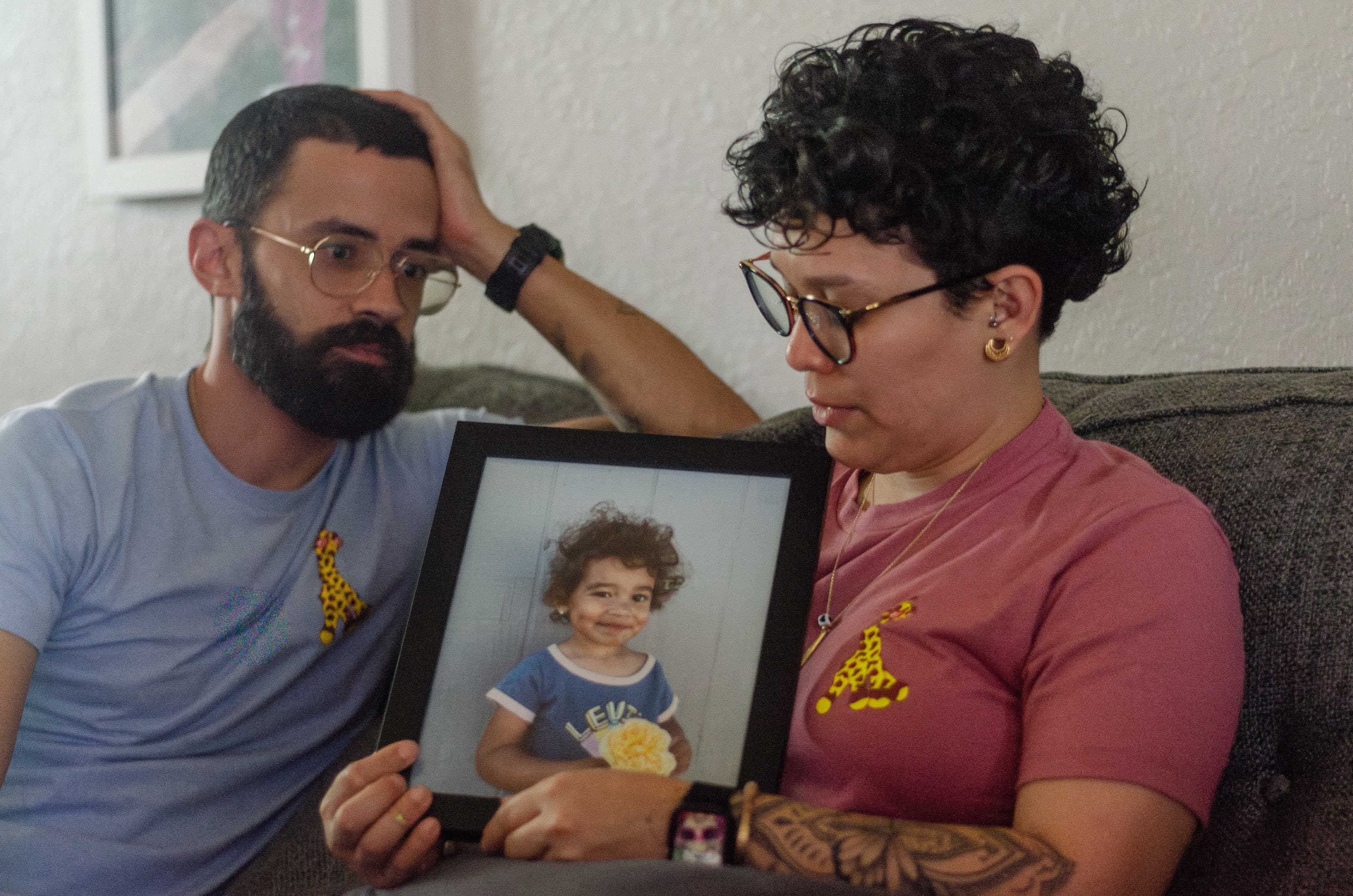
Did Brooklyn know?
We never told her directly. But at some point, she knew.
It started at St. Jude. Darline was on the phone with one of the nurse practitioners and Brooklyn asked me, “Who’s Mommy talking to?” I said, “She’s just talking to one of the nurses, honey.” Then she asked me, “Am I gonna be okay?” It crushed me. Before Brooklyn was diagnosed, I promised I’d never lie to her. But she was two and a half years old. I didn’t know what to say. I wouldn’t even know where to start. So of course I said, “Yes, Brooklyn, you’re going to be okay.”
I remember turning around toward you after I hung up the phone, and you were bawling. She knew.
That moment really messed me up. She had just spent weeks in what felt like a foreign place, being poked and prodded, but being that young, I didn’t expect her to piece things together like that. But she always had a way with picking up on people’s energy and facial expressions. She really sensed things.
She knew so much more than we thought.
There was another hard moment where she put me on the spot. She asked me to take a picture of her in her crib – she loved seeing her picture. She said, “Let me see, let me see!” She looked at it and asked, “Why do I look like that?”
She always asked her Daddy the hard questions.
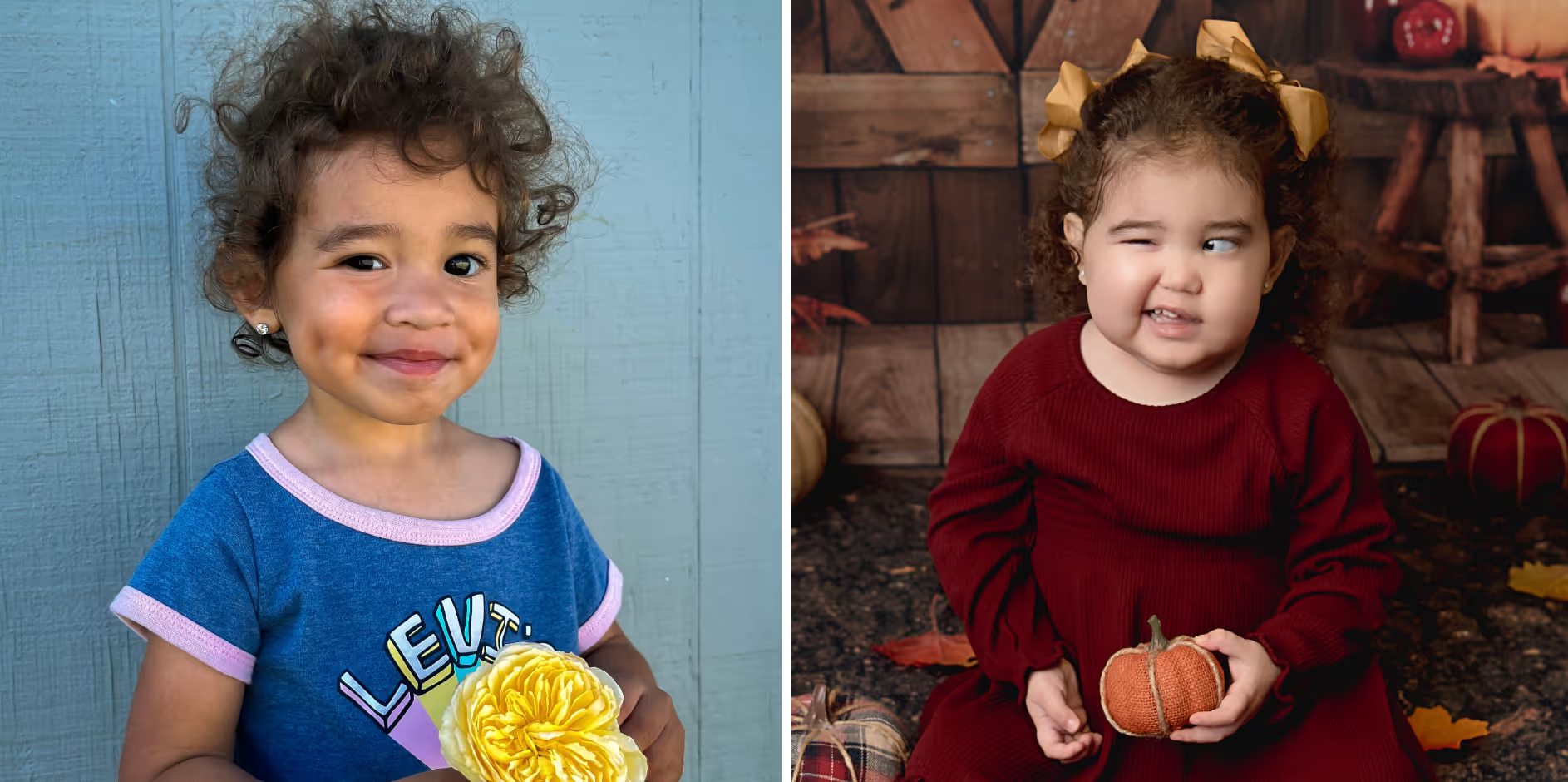
What was Brooklyn like?
Brooklyn was alert and vocal early on, and a fast learner. Before she had words, she was always babbling! I taught her sign language to help her communicate. When she became nonverbal again during treatment, we went back to signing. I never imagined how useful that would be. She also loved reading at bedtime. We’d read three books every night, and she’d always beg for one more. We read her favorites so many times she started reading them back to us.
The Very Hungry Caterpillar was big. And Chicka Chicka Boom Boom.
Dr. Seuss, too! And nature books. This was before she got sick.
After her diagnosis, I couldn’t read her favorites anymore. I tried again after she passed. I just couldn’t.
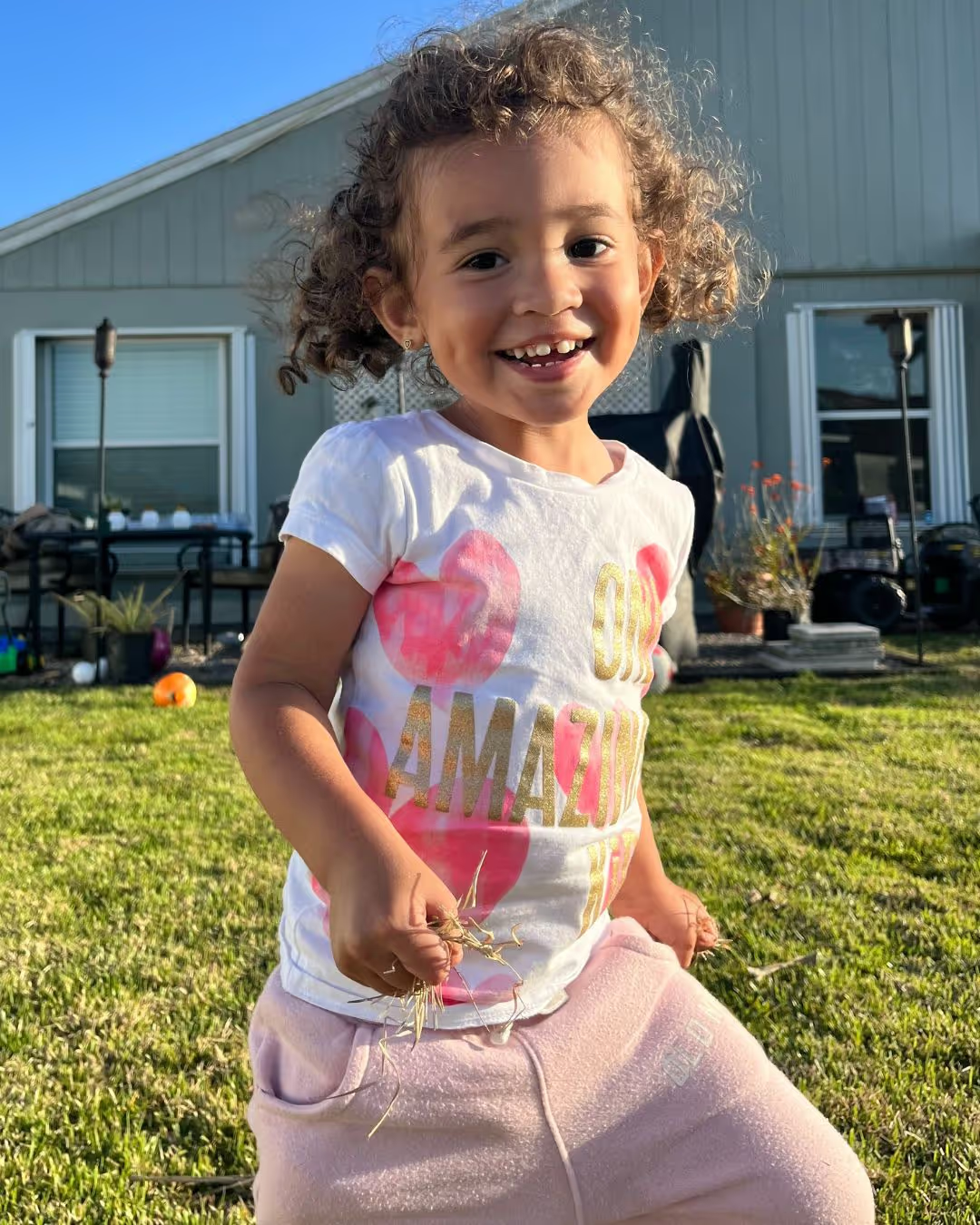
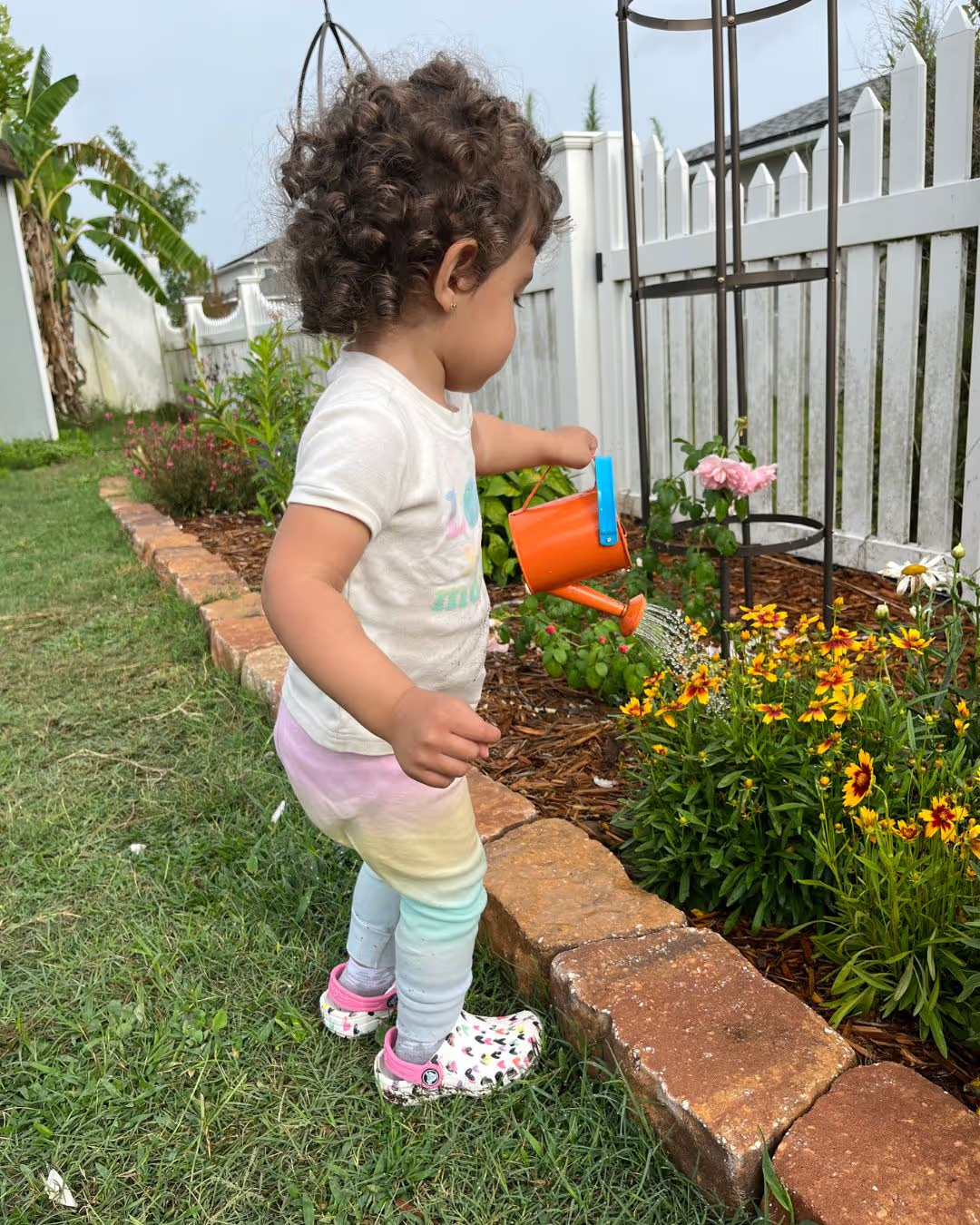
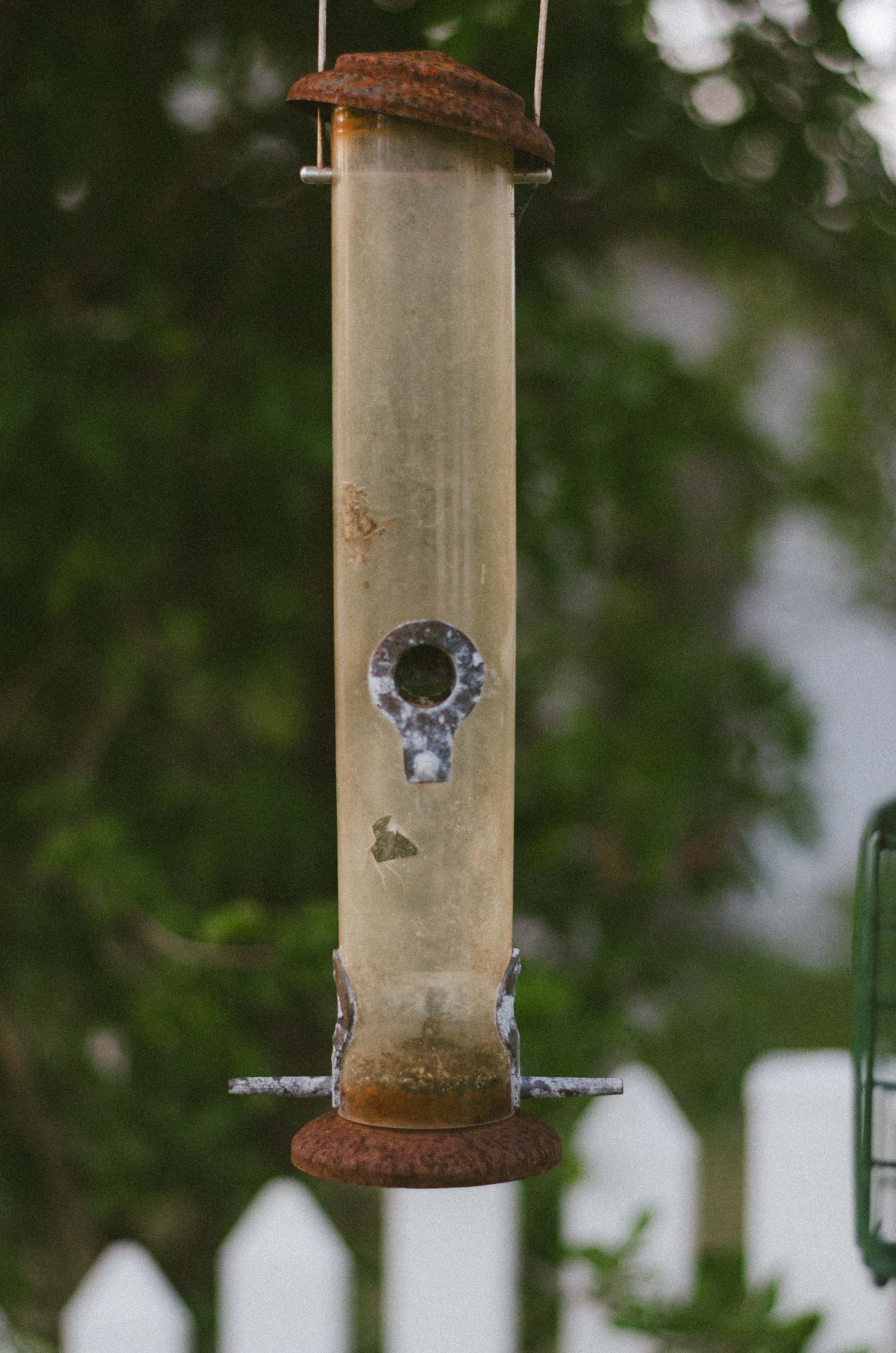
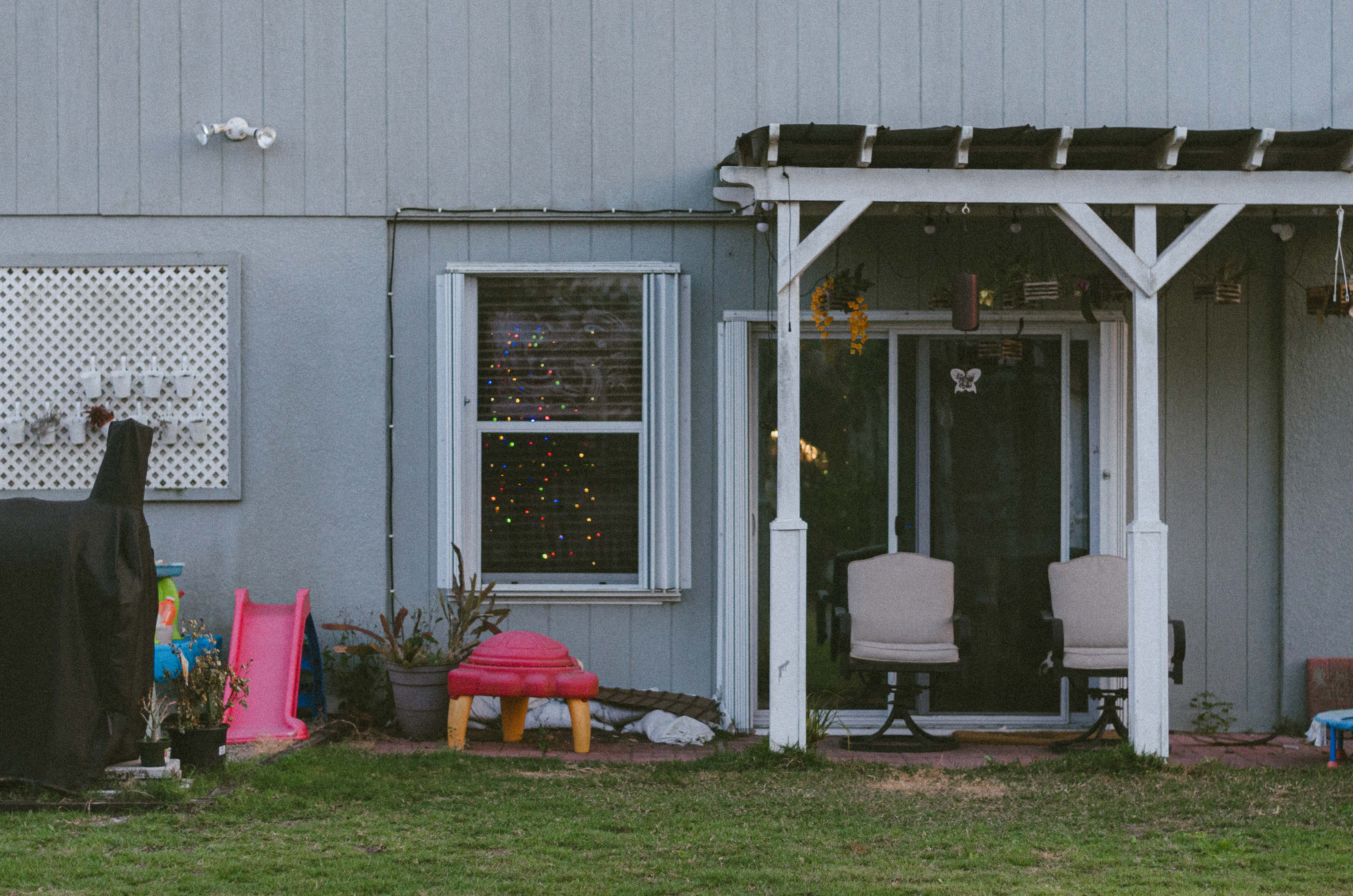
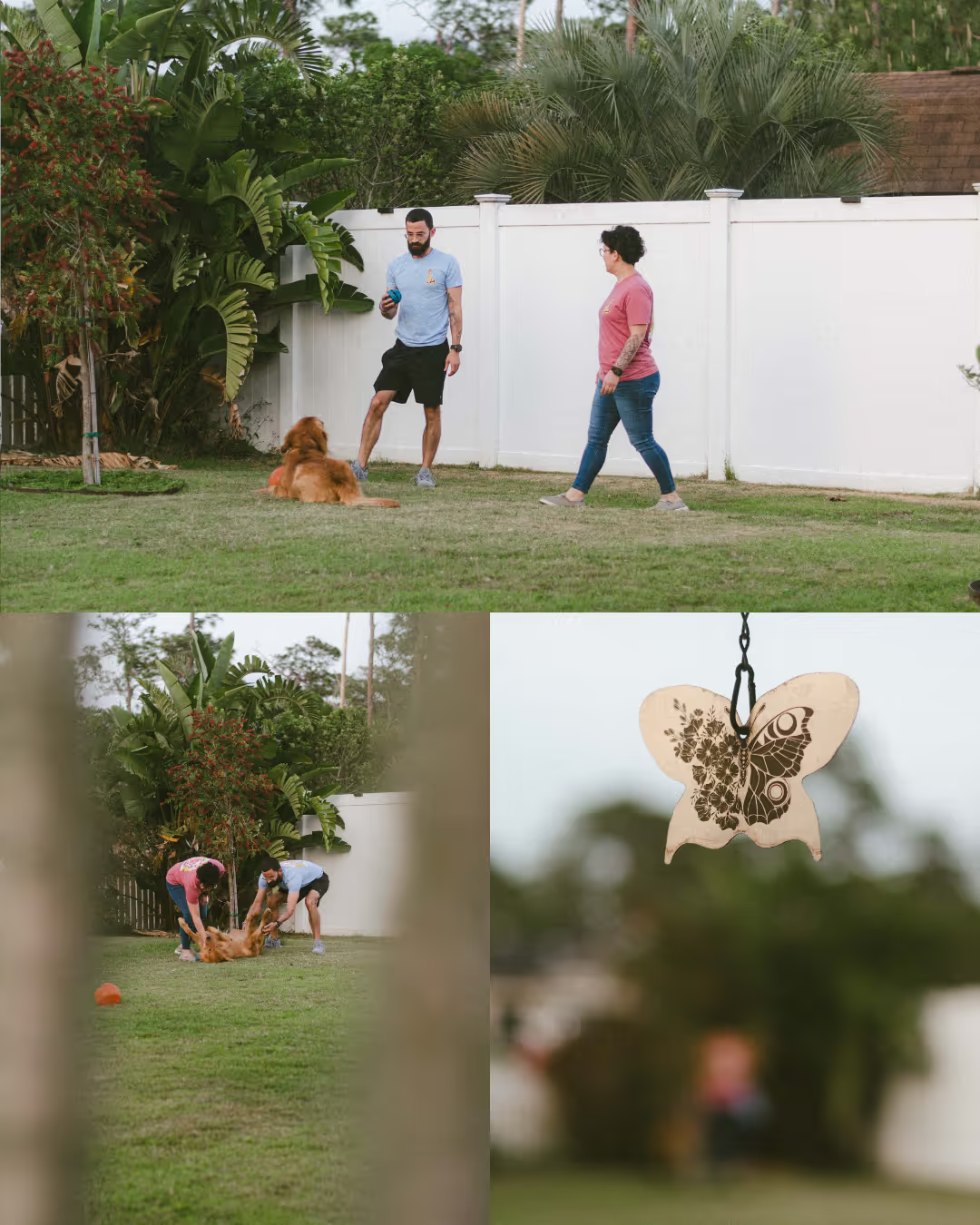
She also loved being outside. We have bald eagles in our backyard and she’d ask, “Do you hear them, Daddy?” She could recognize bird calls: cardinals, mourning doves. She’d tell you exactly what you were hearing.
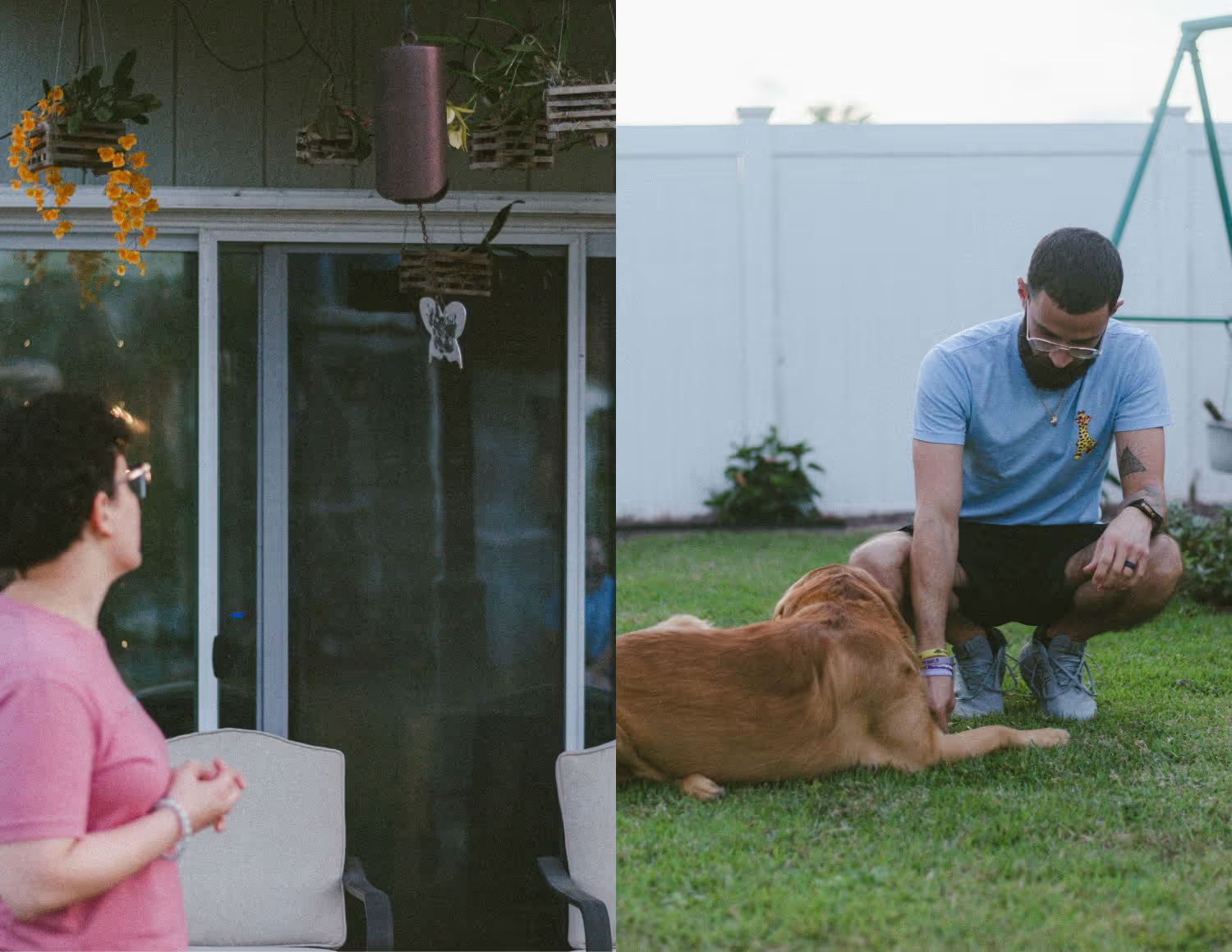
She’d go looking for spiders in the plants – which I hate – but she wasn’t scared at all. And the first time she saw a butterfly? That was it. We started a butterfly garden just for her. Got some milkweed, and within days, monarchs had laid eggs. She watched them hatch, grow, and turn into chrysalises.
Butterflies have chrysalises. Moths have cocoons.” She knew the difference. I didn’t even know that.
Me neither – learned it from her. She loved all the pollinators: bees, butterflies, anything like that. And with Brooklyn, you’d show her one new thing and her curiosity would just explode. You could almost see the wheels turning. She’d see something and just go, “Wow!”
That little voice – her “wow” – I’ll never forget it. Seeing the world through her eyes was beautiful. Everything was new and magical.
"Seeing the world through her eyes was beautiful. Everything was new and magical."
She loved music, too. She’d always ask for instruments.
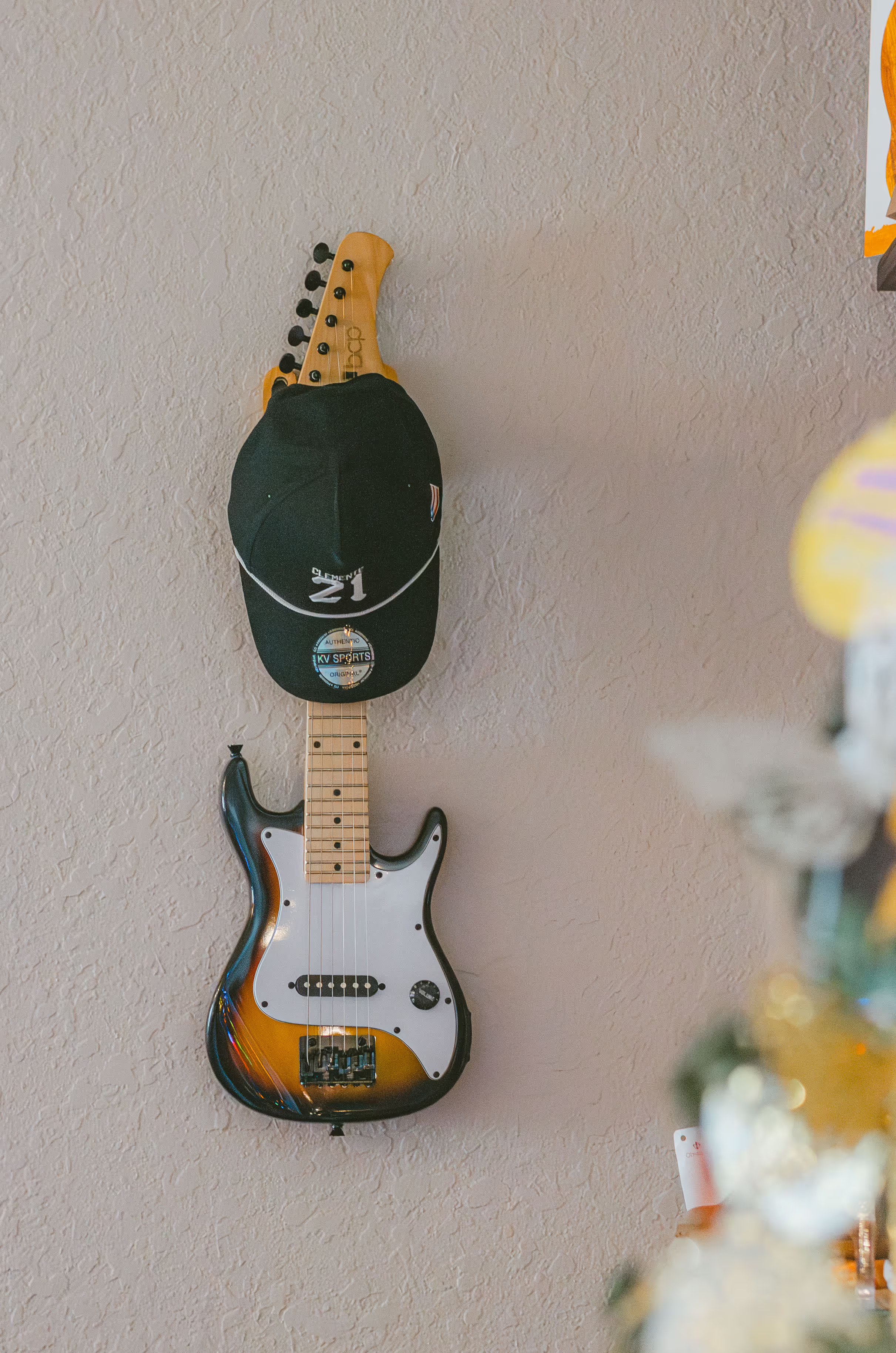
She wanted a rock and roll guitar because of Chuck Berry's 'Run, Rudolph, Run.' And of course Daddy couldn’t get her a kid guitar. He had to get her a real one.
I remember thinking, what two-and-a-half-year-old is gonna be actually using this?! We had to be careful with the strings. The harmonica was special, too. When she stopped walking, we had to start doing breathing exercises to keep her lungs going. I couldn’t say to her, “Okay, time for respiratory therapy.” So I gave her the harmonica and said, “Let’s play.” She started blowing on it, making her own music and laughing.
It was exactly what her body needed. She loved to dance, too. She danced all the time.
Any song with a beat? That was it. Pharrell. Bobby Brown. She had style early on.
Trolls, Springsteen, Justin Timberlake. The Beatles – she loved the Beatles.
We played Yellow Submarine every morning on the way to radiation. She’d sing from the back seat.
She always knew when the trumpet part was coming. She loved the trumpet.
And that kid never met anybody she didn’t love. She taught me patience – which I have zero of. I lost my cool a lot, not at her, but for her. She sort of taught me, like, “Hey Dad, just take a breath.” I never thought the greatest teacher I’d ever have would be a two-and-a-half-year-old.
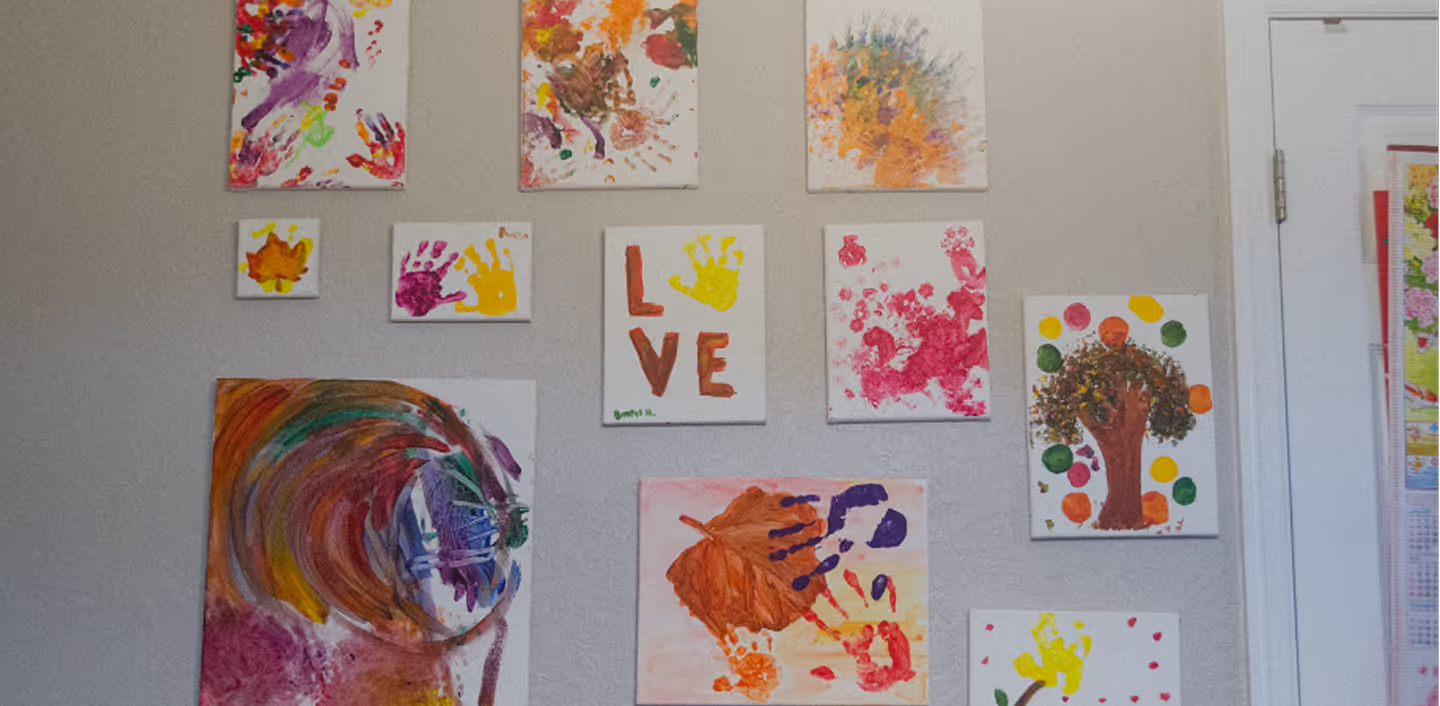
"I never thought the greatest teacher I’d ever have would be a two-and-a-half-year-old."
When did you notice something was wrong?
One night in April 2023, we noticed her left eye wasn’t focusing. It was deviated. Both of us being in the medical field, we knew that lazy eyes don’t show up that fast, but we were hoping it was something simple.
There had been some other early signs a month prior, too, that we later learned were related – unusual fatigue, tantrums (she hadn’t had a tantrum up until that point), and stomach bugs. We had just started taking her places because of COVID, so we figured her immune system was playing catch up. But that night when I saw her eyes were deviated, I quickly remembered the time where she was projectile vomiting and it flew across the room – it wasn’t normal. At that moment I truly thought to myself, there’s something in her head.
We already had an appointment with the pediatrician scheduled, because she had diarrhea earlier in the week and we wanted to be safe. So when I took her in for that appointment and showed them her eye, they sent us for bloodwork.
The next day she started tilting her head, trying to see straight. It quickly got worse. That’s when we got concerned. She was still walking, but something was very off.
I started calling eye doctors, but everyone was booked. Finally I found something at Nemours Children’s Hospital. The doctor there asked if I noticed she had a facial droop. I hadn’t. I felt awful. She could tell I worked in healthcare and asked if I was a nurse. “Do you know what cranial nerve six is?” I said yes (it’s one of the nerves responsible for motor functions of the eye). She brought in another doctor to confirm. Her vision was fine, but they both agreed it was CN VI palsy, which we later learned can be a symptom of the more aggressive form of DIPG. She asked Brooklyn to walk, and her gait was off. So she sent a script for an MRI and said they’d call in 24 hours.
"That doctor knew exactly what she was seeing. And thank god. Too many kids are misdiagnosed or brushed off."
After she sent in the script, we left. Ten minutes later she called and said, “Go to the ER. She needs an MRI now.” So we took her. She needed sedation but there was no anesthesiologist available, so she was admitted overnight and was the first case the next morning. The scan was supposed to take 30 minutes. It took 90.
When an MRI takes that long, you know they found something.
I was still hoping it was operable. Then the neurologist came in and said it wasn’t.
"Doctors will tell you, 'It’s nothing you did,' and then follow it up with, 'We also don’t know what causes it.' So of course you start questioning yourself."
The neurologist came in with a whole team – the first bad sign. He didn’t even address Brooklyn at all, which infuriated me. He very bluntly goes, "Did anybody discuss the results with you?" We said, "We were told that’s what you’re supposed to talk to us about." The look on his face said it all, when he realized we had no idea. He said, "It's called Diffuse Intrinsic Pontine Glioma." Of course, we had never heard of it. But when you hear words like tumor, inoperable, clinical trial…the hope just disappears. Doctors will tell you, "It’s nothing you did," and then follow it up with, "We also don’t know what causes it." So of course you start questioning yourself. What did we do? What did we feed her? What was she exposed to?
"When you’re already blaming yourself, the last thing you need is to feel judged or dismissed by medical staff."
Her diet was immaculate. We made all her food from scratch. No store-bought, ever. We were so intentional, which made not having answers even more painful.
The bedside manner at some of these places was just unacceptable, and this wasn’t the first or last time we experienced it. And when you’re already blaming yourself, the last thing you need is to feel judged or dismissed by medical staff. When you visit the hospital as often as we did, you get labeled a frequent flyer and start getting treated differently. Brooklyn would have complications related to her condition – like vomiting – and we were given clear instructions to take her to the ER within 35 minutes of its onset. This was a sick child and we were doing exactly what we were told, but the ER staff always thinks you’re overreacting.
"Pediatric healthcare requires deep empathy. Put yourself in the parents’ shoes. I know the system can wear you down, but if you don’t have bedside manner, you shouldn’t be in this line of work."
What happened after her diagnosis?
We were so overwhelmed and in a complete daze. The second we found out, Anthony’s best friend Lorenzo and his wife Jackie flew down right away and stayed with us for a week. Anthony’s dad came too. They all helped keep Brooklyn distracted and entertained. Jackie cleaned the house, did laundry, filled the pantry, researched trials, sent out applications, and made phone calls.
"They didn’t ask what we needed – they just started doing things."
We’re so grateful. But truthfully, we wish we had more help like that. Everyone would ask us, “What do you need?” again and again. I don’t know what I need. I need my kid. That’s what I need. We started learning about clinical trials right away, because there's no approved treatment or cure for DIPG. We had very little guidance. Word of mouth and social media became vital later on, but we weren’t plugged into that community yet.
I remember the neurologist telling us to not even look up treatment options – said we wouldn’t find anything.
He said something like, “You won’t find anything good.” I think he meant that we’d see some scary stuff. But saying that kind of thing kills hope. We were eventually presented with four clinical trial options, but it felt impossible to navigate. The only options we found were Phase I, which means they had no real data to back their science yet, or they had age restrictions. One trial seemed encouraging, but it was only in Texas, and the company ended up shutting down.
A trial in Miami seemed the most promising. It’s close to FDA approval now. It’s not a cure, but it could offer more time.
But it was Phase I at the time of Brooklyn’s diagnosis. And the drug — ONC 201 — takes three months to start working. We didn’t have three months. Brooklyn had already progressed too quickly. And most trials don’t take kids under five years old.
We eventually went through the DIPG tumor board, where doctors from around the country — sometimes from other countries — meet to discuss patient cases and can suggest their own clinical trials when a child might qualify. We found out she was a candidate for a trial at Columbia.
We were ready to go to New York and told our families. Then three days later they called saying, “Actually, she’s too young.”
They said the helmet didn’t fit kids under four. She was three and a half. Her age was on page one of her file.
That kind of oversight was the final blow. Clinical trials just aren’t built for toddlers. As a dad, I’m supposed to protect my family. And I couldn’t. Guilt is the hardest part of grief.
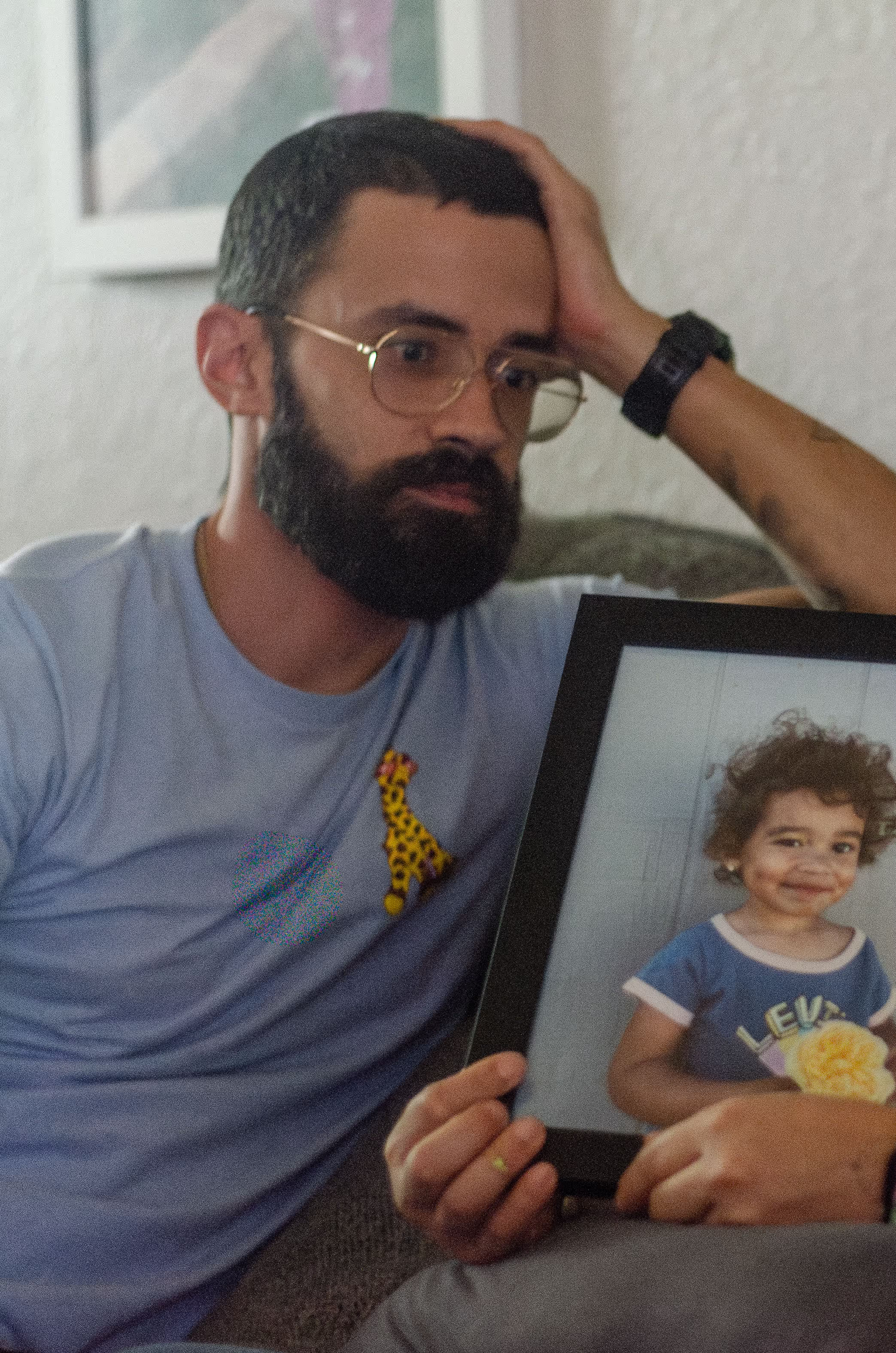
"That kind of oversight was the final blow. Clinical trials just aren't built for toddlers."
I started emailing doctors all over the country. I reached one – Dr. Carl Koschmann, the same doctor who started the Miami trial. He was working on a trial for a similar drug in Michigan called ONC 206, which is meant to be more effective than ONC 201. But he said it wasn’t safe for her to fly. He still helped us and gave us advice, so I’ll always be grateful for that.
It was a Phase 1 trial, so the risk wasn’t worth it, especially while she was in progression.
Jackie had sent out applications to different hospitals, including St. Jude. We got a call from them early Monday morning asking to send Brooklyn’s records over to confirm her diagnosis. The following Sunday we were all headed to St. Jude. Not everyone was supportive of it.
St. Jude’s DIPG trial hadn’t shown success in years, and they’d only recently started to share their data, despite having one of the largest pediatric cancer datasets. But they didn’t hesitate to take us. Maybe because they knew we had no other options. When you’re early on in this journey with no time to waste and St. Jude comes calling, you don’t know any better. I think 10/10 parents would have done the same thing. The science may have been better in Miami – and we really liked the doctor there – but his staff was atrocious. At least at St. Jude we felt cared for. And at the end of the day, the outcome would have been the same across all trials.
"They made it easy to be present with Brooklyn."
St. Jude is designed so that kids feel like they have a semi-normal life. Music therapy, an indoor playground…they had it all. Brooklyn had a great relationship with Miss Amy, the music therapist, and the nurses played with her before radiation. We sang songs, had psychologist appointments, and had a place to relax in between appointments. They made it easy to be present with Brooklyn. And they covered all expenses – physical therapy, medications, flights.
We never got a bill. They even sent us adaptive equipment, like Brooklyn’s walker. I looked it up later – $2,000. All they did was ask for our address and they sent it. It’s truly just like the commercials. I actually used to turn those commercials off before all of this – couldn’t fathom it. Then we lived it.
We lived in that bubble for three months. We were scared to leave.
"We wouldn’t have been able to pay the mortgage or the bills without it."
The one thing I’m grateful for is that we were able to be there with her, together. A lot of parents we met didn’t have that – one had to stay home and work while the other went with their child to treatment.
We were really fortunate. I had just started a job in a pediatric cardiac ICU when Brooklyn got diagnosed. When I called my manager and told her, she didn’t hesitate. She said, “Don’t worry about us. Take care of your kid.”
Same for me. My director cried on the phone. Even after Brooklyn passed, I didn’t reach out for a long time. They gave me space. That doesn’t happen often. Most parents don’t get that kind of support.
I am so grateful for the time they gave me. The only hard part was that I hadn’t worked at my job long enough to qualify for paid leave. Our friends started two GoFundMe pages – we wouldn’t have been able to pay the mortgage or the bills without it.
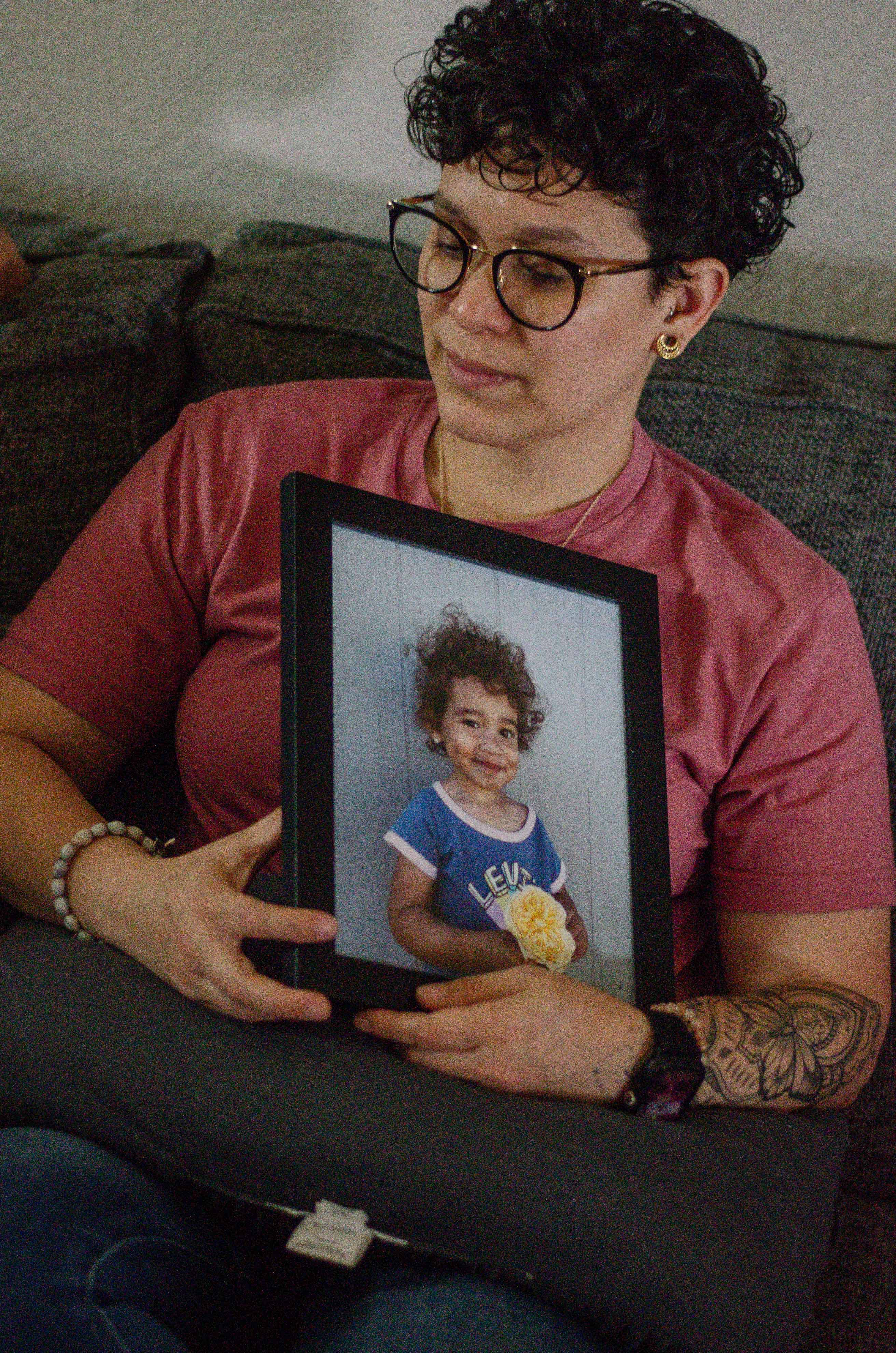
"We lived in that bubble for three months. We were scared to leave."
What happened after the summer at St. Jude?
She finished her 30 rounds of radiation at St. Jude in August, and then we came back home in September. That’s when she had her honeymoon period, where the radiation stalls progression of the tumor and you get a little window of time. She still couldn’t walk on her own, but her speech started coming back (she had lost it a couple months prior and couldn’t talk on her birthday in late August). She spoke slower and thought slower, but she was still her. Some families don’t even get that.
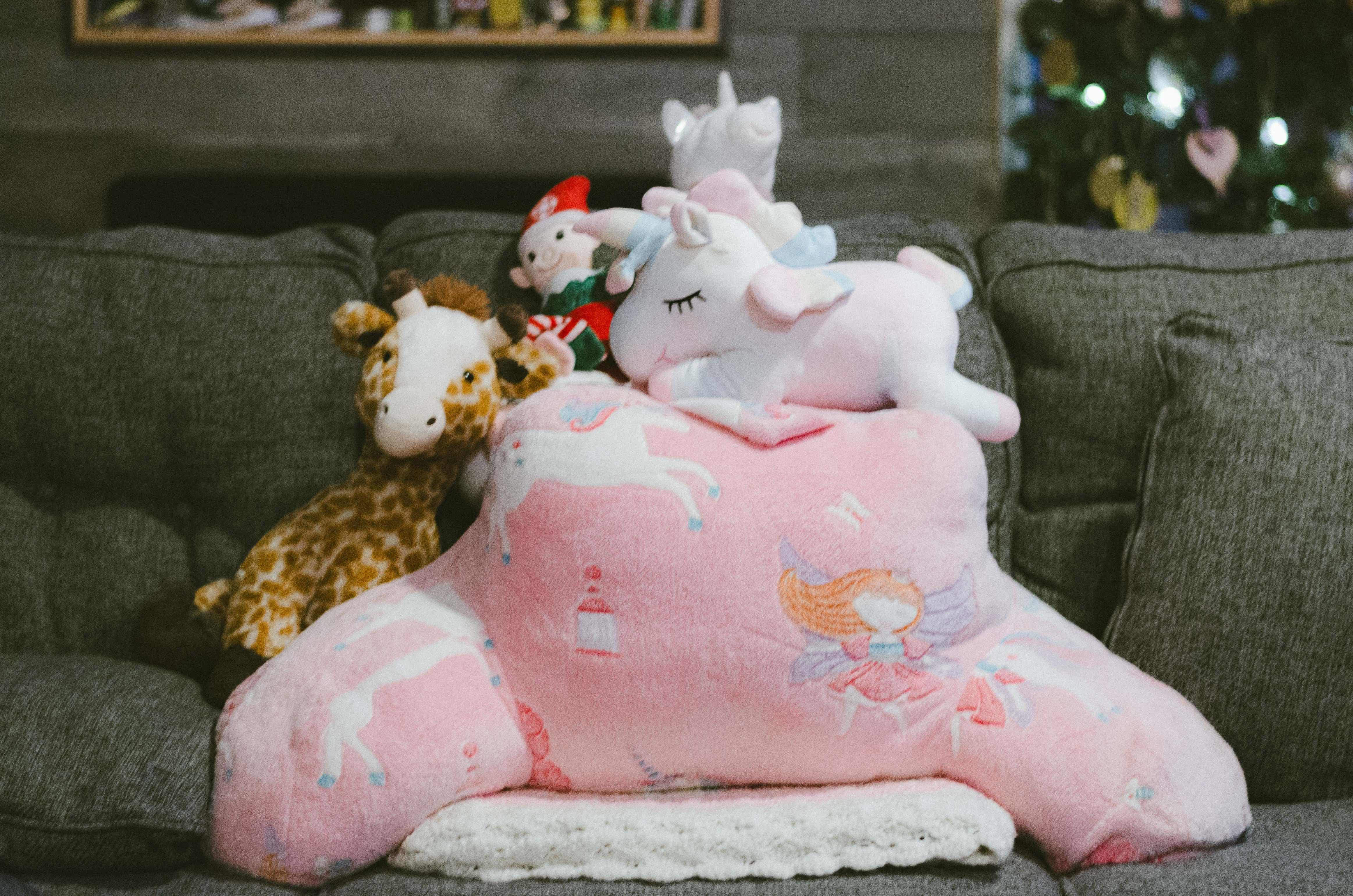
She started to really love the couch. She’d come out every morning and sit in the same place. It was her safe spot. So we set it all up for her – she’d play there and eat there. When the physical therapist came, it started to become a good indicator of her strength, seeing how willing she was to try to get up from her spot. But after the honeymoon phase, getting her to take her chemo was impossible.
She had to take so much medication, and it all tasted awful. I tried her chemo once and thought, how am I supposed to give this to a kid? I told her, “Honey, this is what we need to do to help you feel better.” And she said, “Okay, Daddy.” She took all seven meds all at once.
They act like everything tastes like cherry Tylenol. But dexamethasone is disgusting. And no one tells you how to help. I remember calling St. Jude one week that fall, worried that Brooklyn hadn’t taken her chemo. They told us to enjoy our upcoming Make-A-Wish trip in November and that we’d figure it out after. We went back to St. Jude in late December and found out her tumor had doubled in size. The doctor told us she didn’t need to take the chemo anymore. Her face said it all.
We never saw the final MRI. It had to be massive.
Her other eye started changing – too much pressure on the optic nerves.
It was confusing to us, because she had so much energy still. Some nights we couldn’t even get her to bed. I’d ask, “Want to try walking?” and she’d say yes. So when they told us she was in progression, it didn’t make sense.
"Brooklyn's anxiety was through the roof."
St. Jude wouldn't allow a second round of radiation – they said we had to wait a year, which we obviously didn't have. So a DIPG nurse navigator from the Chad Tough Foundation sent Brooklyn's records to the tumor board. By the end of January, the ONC 201 trial in Miami had accepted Brooklyn on compassionate care. This means that even though she technically didn’t qualify for the trial, they let her try it anyway because we had no other medication options. We had always felt comfortable with Dr. Hall, so we left for Miami right away. He agreed to do another round of radiation – 10 treatments instead of 30. At least we were trying something.
Some doctors are more willing to do radiation because they know the child won’t live long enough to experience the other issues radiation causes. They’re not worried about future cancers because these kids just don’t make it that long. So we went, did all the prep, the radiation simulation, etc. Everything was ready. But the day before radiation was scheduled to start, Brooklyn’s anxiety was through the roof.
She felt like a completely different kid.
"We had to ask ourselves if it was worth it. No one talks about how damaging it is, especially to a developing brain."
That entire week prior, it was impossible to get her attention. She was hyperfixated on Play-Doh, but nothing else. Not TV, not books, not us talking to her. She didn’t even want to go outside. So when the hospice nurse came by the day before radiation, we shared this and learned it was something called terminal restlessness. It’s when a person is very close to the end, and their body reacts with extreme anxiety and agitation. So between that – and also knowing how hard radiation was on Brooklyn the last time – we had to ask ourselves if it was worth it. Radiation changes kids. Brooklyn was never the same after her first round. No one talks about how damaging it is, especially to a developing brain.
So we met with Dr. Hall – we were so grateful he agreed to see us and listen to us the day before. He was so understanding. I asked him, what would you do if it were your child? Would you do a second round of radiation? He said he wouldn’t do it. We were surprised he even responded. It gave us peace.
That’s when we knew it was time to focus on her comfort – but that set off a whole other round of issues. When hospice says they’re going to make her comfortable, why am I still hearing noises from my child? Why is she moaning? She was supposed to be completely out of it. She was 34 pounds and on adult doses of morphine – and it still wasn’t enough. But they wouldn't increase the dose. There was one time when the nurses were talking about bathing her. Brooklyn – who was supposed to be in a medically induced coma – woke up as soon as she heard the word “bath.” She despised baths.
She was conscious of what was going on. Their idea of comfort was not at all comfortable for Brooklyn.
She passed away on February 17, 2024.
It took her so fast.

Would you feel comfortable sharing Brooklyn's room with me?
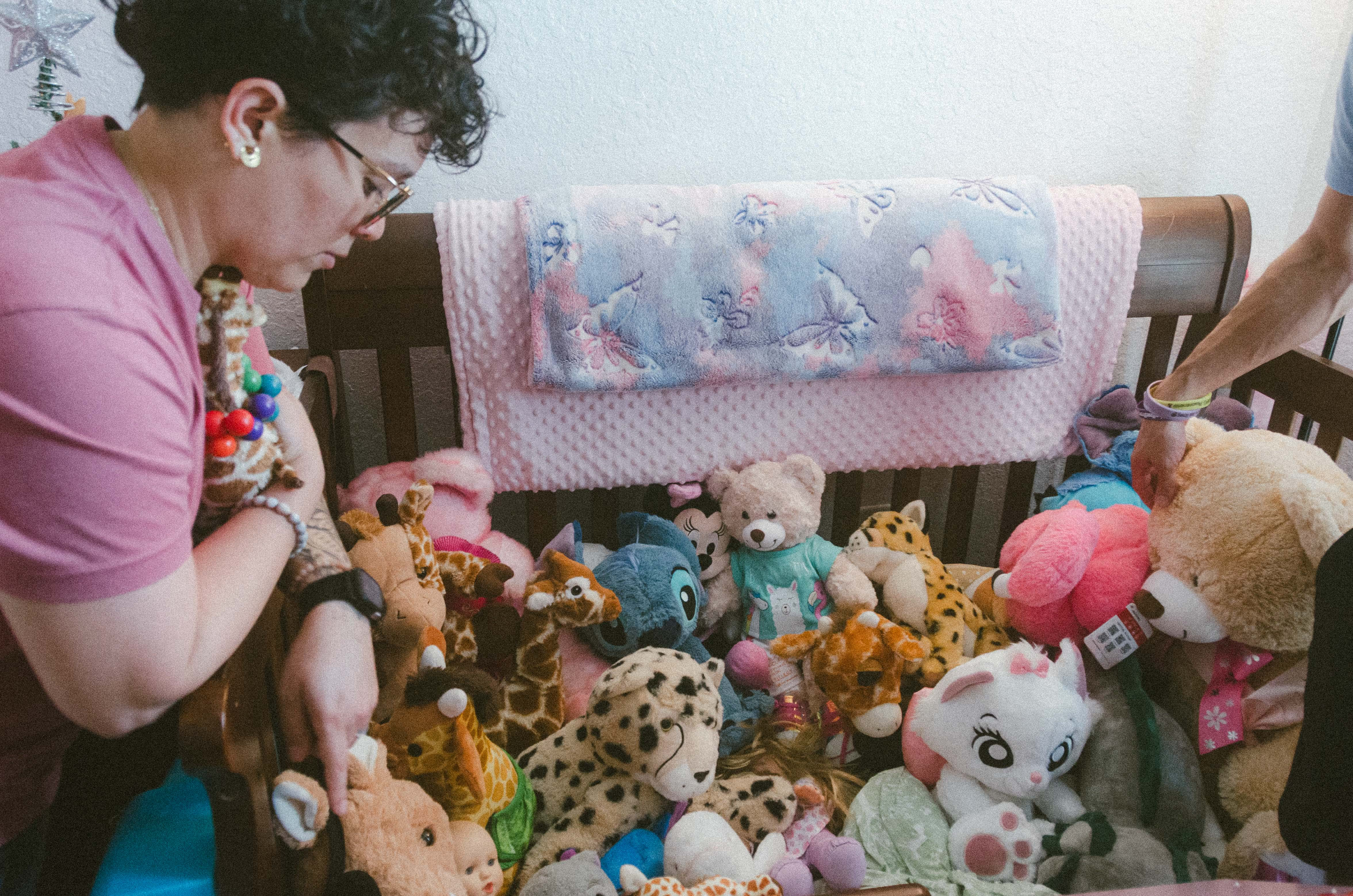
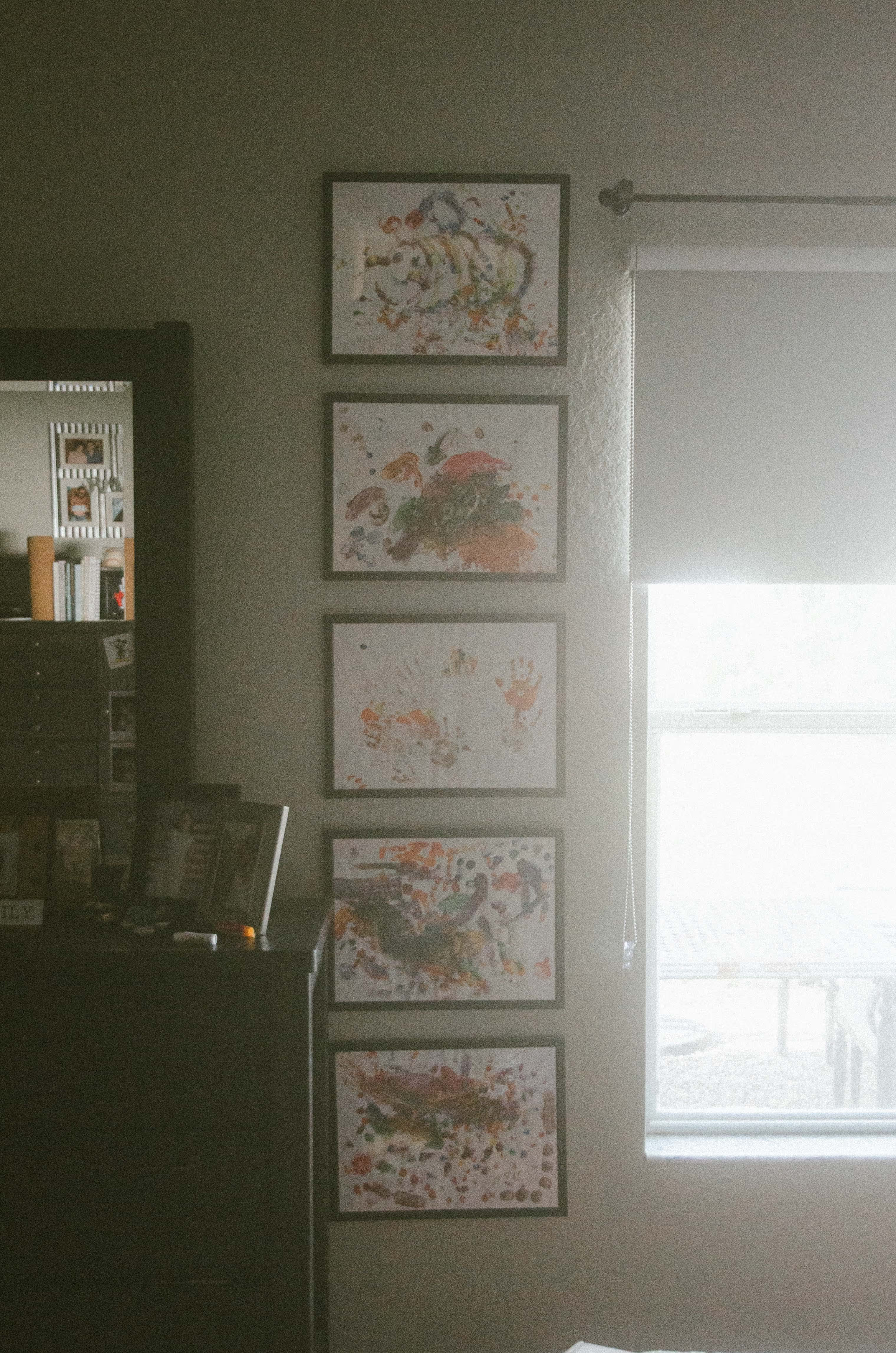
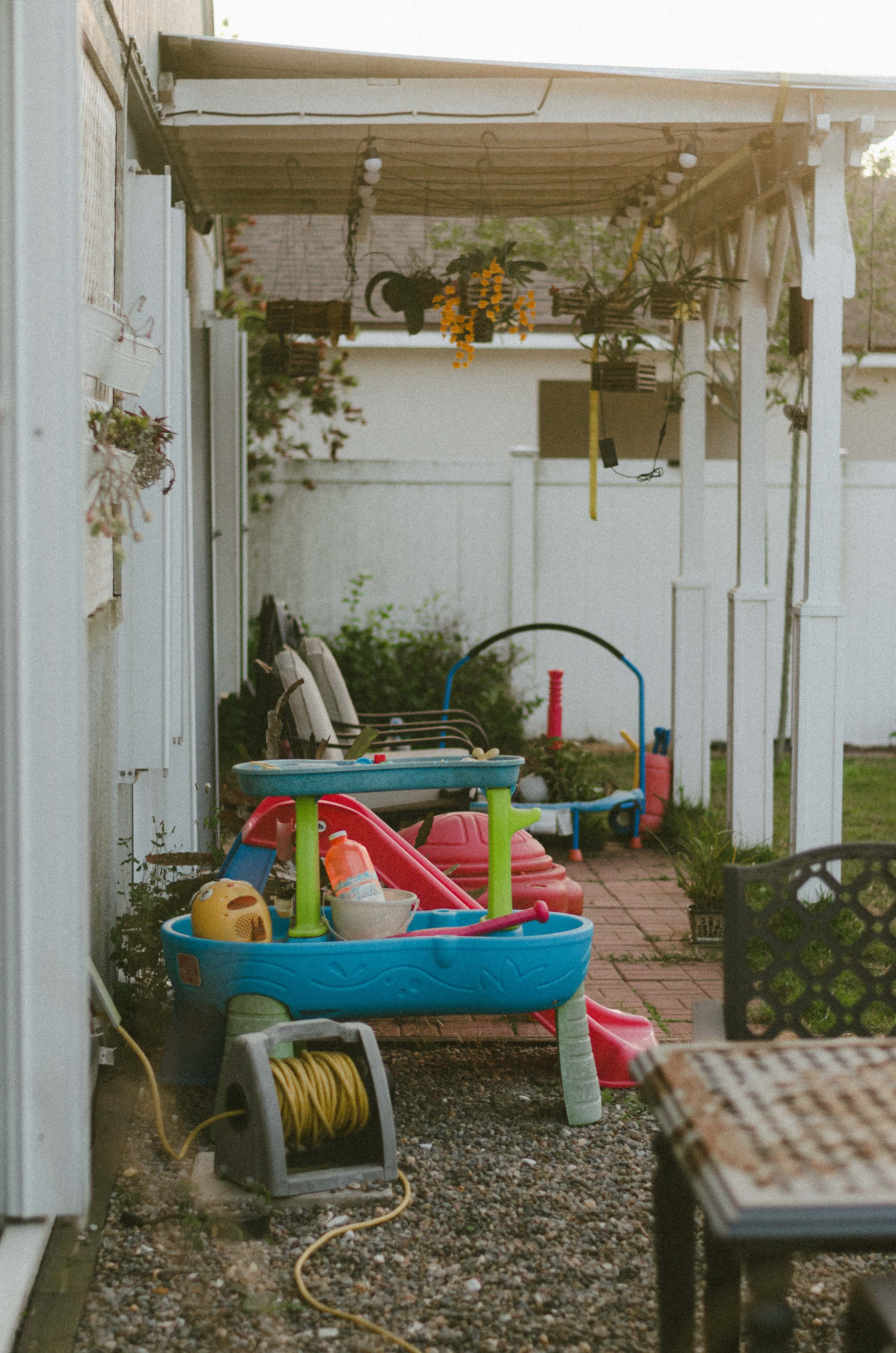
Of course. Don't mind the mess. Everything’s where she left it.
We couldn't throw anything away.
It’s a lot to manage. Her last Christmas was her biggest. My NICU team got her a Barbie Dream House. It took up half the room.
I spent two hours building it. She didn’t care about her other gifts – just that one.
Her Disney Princess dress from Bibbidi Bobbidi Boutique is on a mannequin. We’d love to have that photographed.
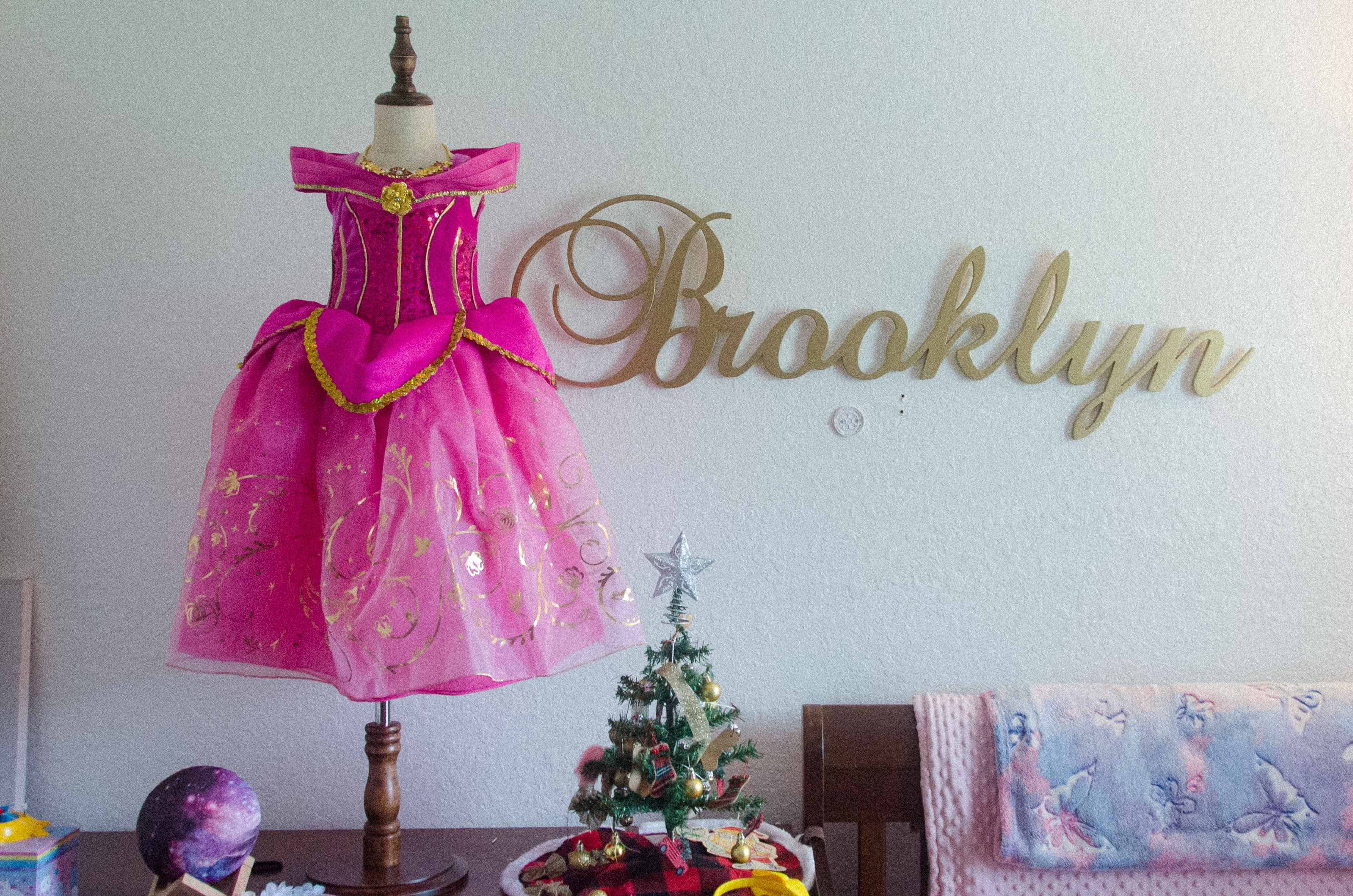
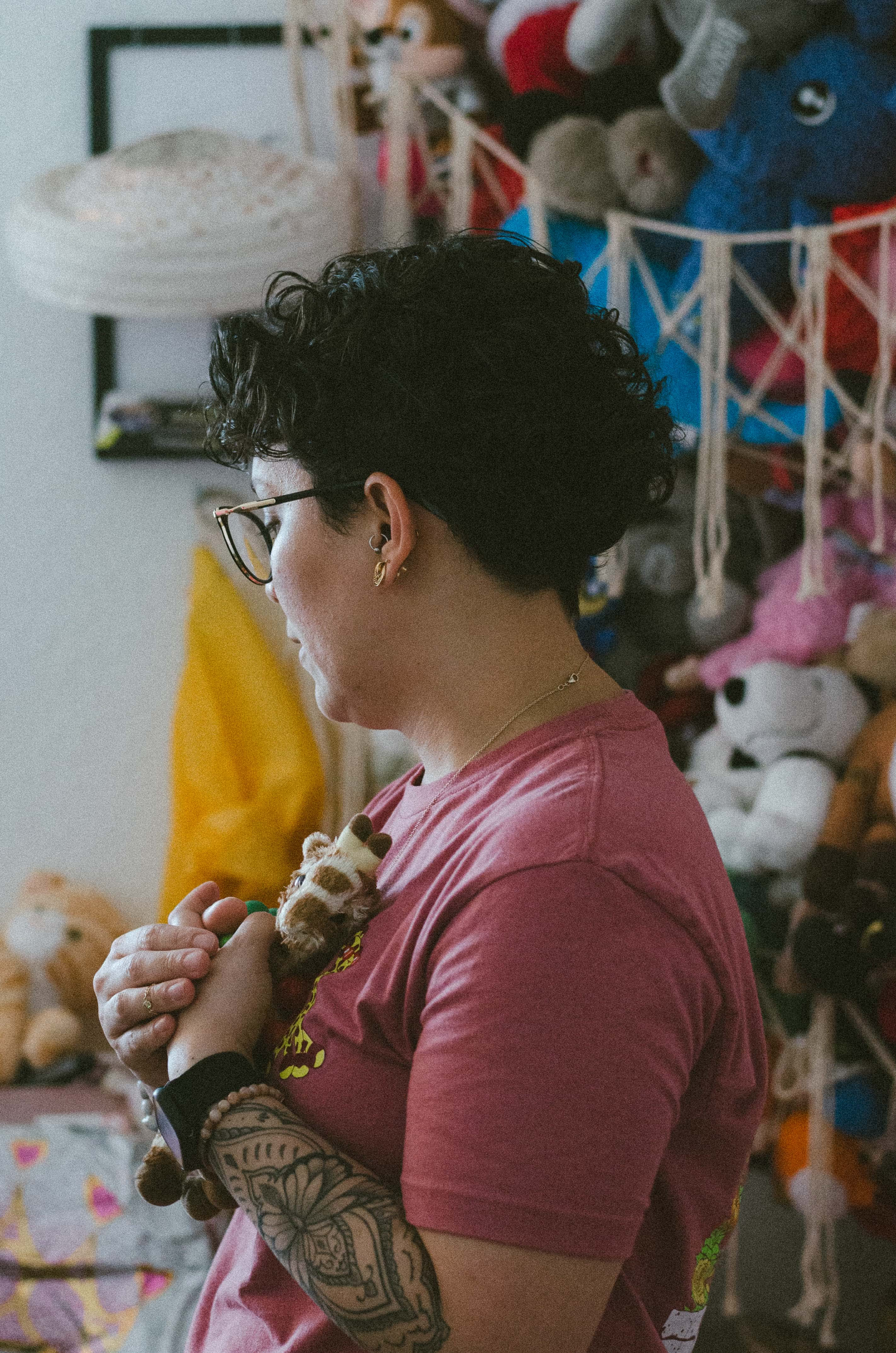
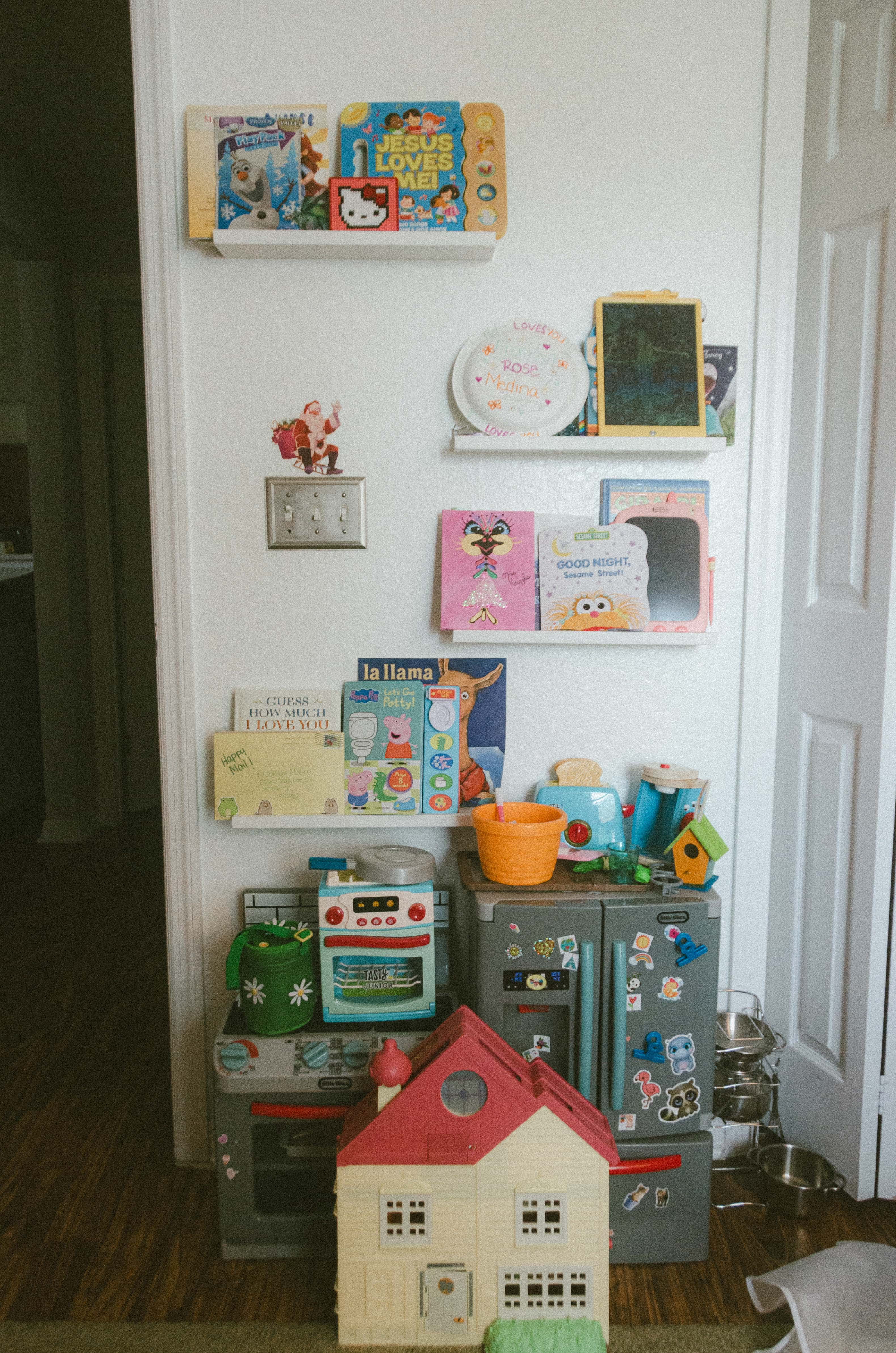
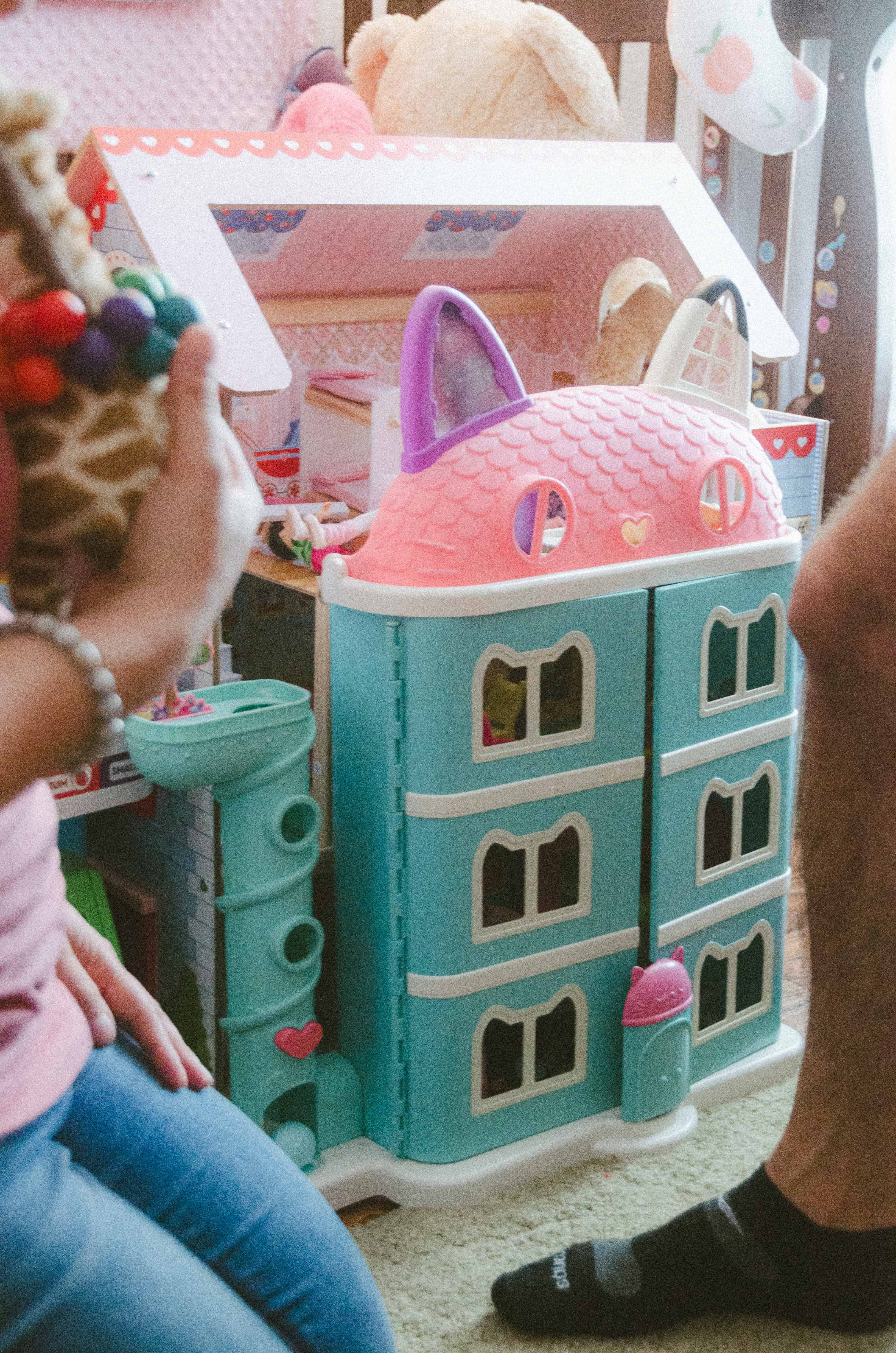
"I've tried to not avoid the room – I really wanted to face all of this head on. But I had panic attacks the first few times. Every memory rushed in."
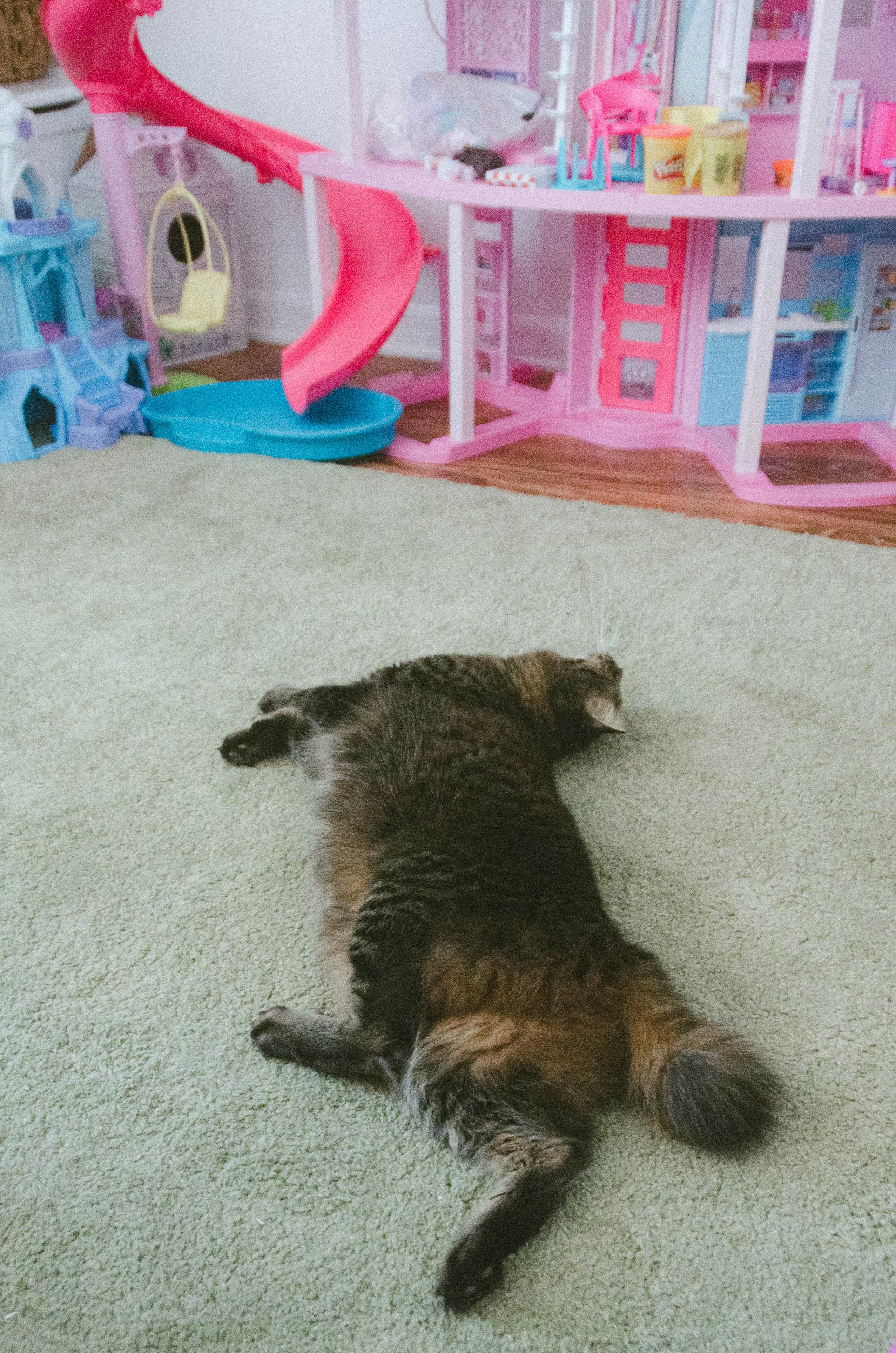
Remi wants to come in now. He misses her too.
She was Remi’s buddy. He still lays on the rug where they played.
You’re the first person to come in.
Yeah. No one else has.
I've tried to not avoid the room – I really wanted to face all of this head on. But I had panic attacks the first few times. Every memory rushed in. Eventually, we want it to be a safe place. A special place to talk to her. But we’re not there yet.
She loved her room, but she slept with us every night from diagnosis day onward.
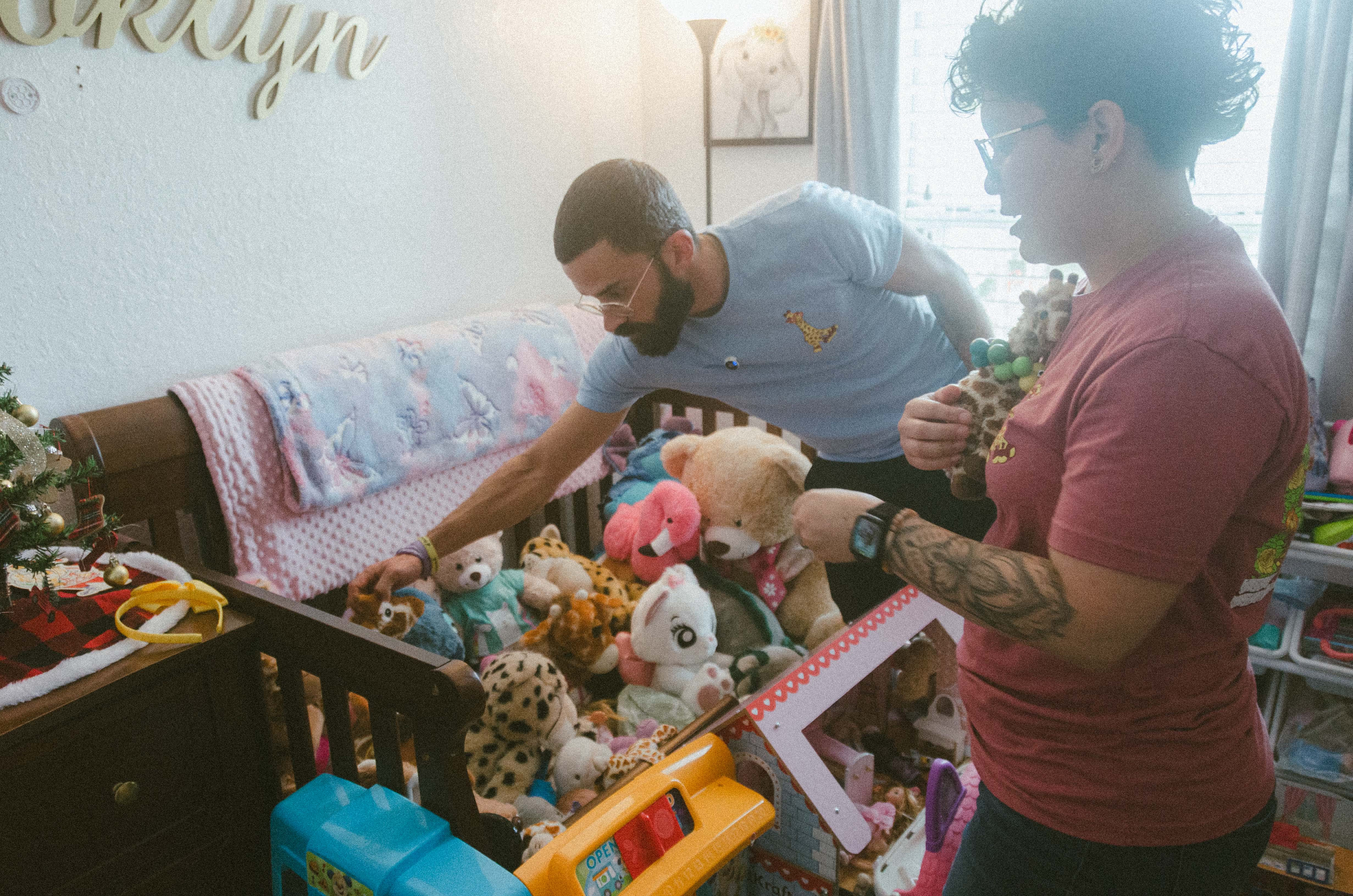
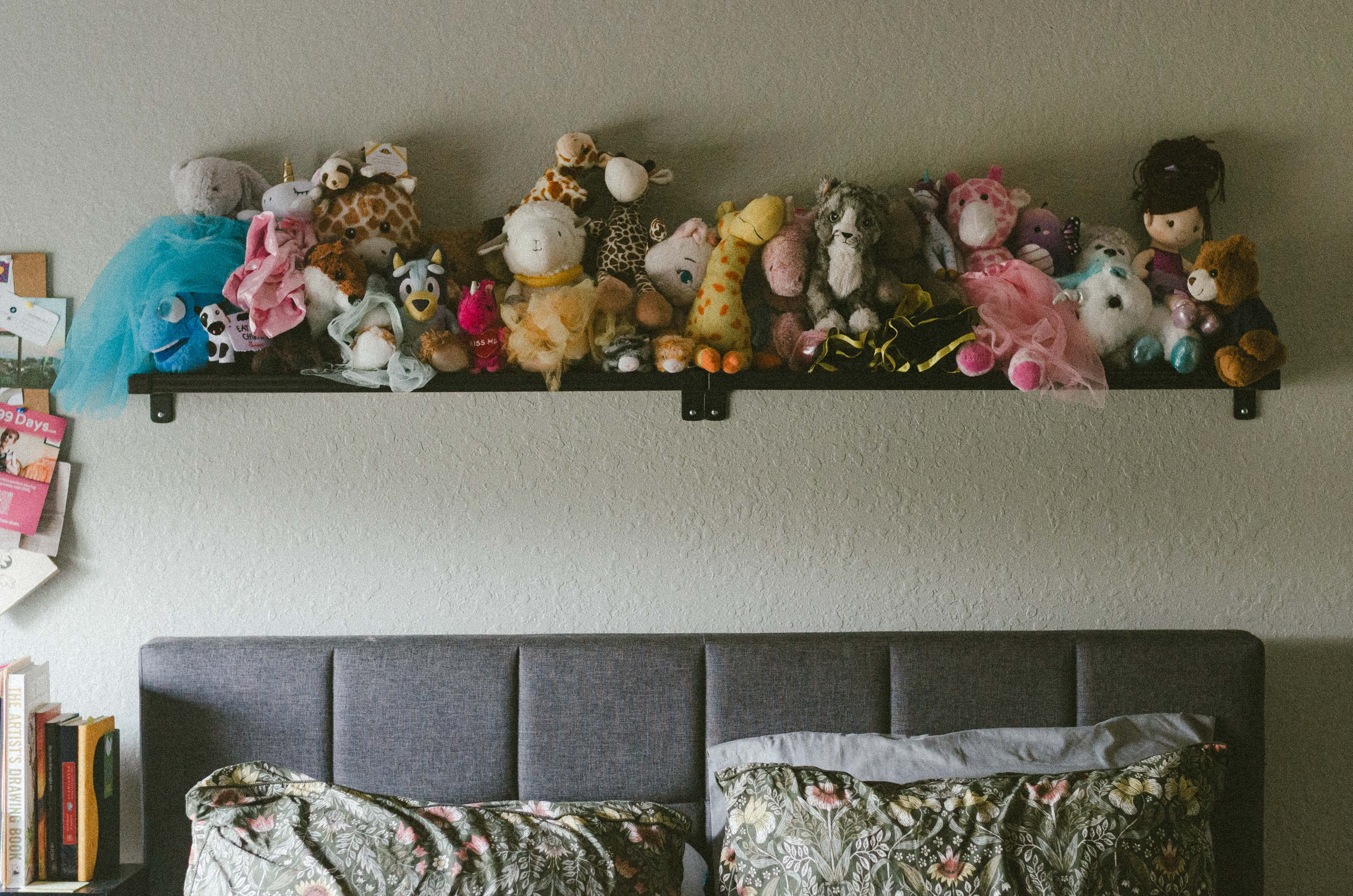
Some nights it was really hard to get her to go to bed. But we didn’t fight her on it. What were we going to say – no? You want every moment. When we’d eventually go to bed, she’d always ask for a new stuffy. We’d end up with 30 of them in the bed.
She’d say something like, “Daddy, the giraffe with the eyelids!” Giraffes were her favorite. She had so many. He always got up to find the exact one she wanted.
How do you cope?
We tried therapy. It was a disaster. It’s hard to find a therapist who understands the loss of a child. The first one told us to travel, and then asked if we had considered medication. I lost confidence in her completely.
"People will say things like, 'Your child wouldn’t want you to live like this.' But that’s not helpful. It feels like judgment."
The therapist also asked, “Have you thought about having more kids?” That question is too common. Brooklyn had just passed away. That experience made us not want to try therapy again.
"We're still learning how to grieve."
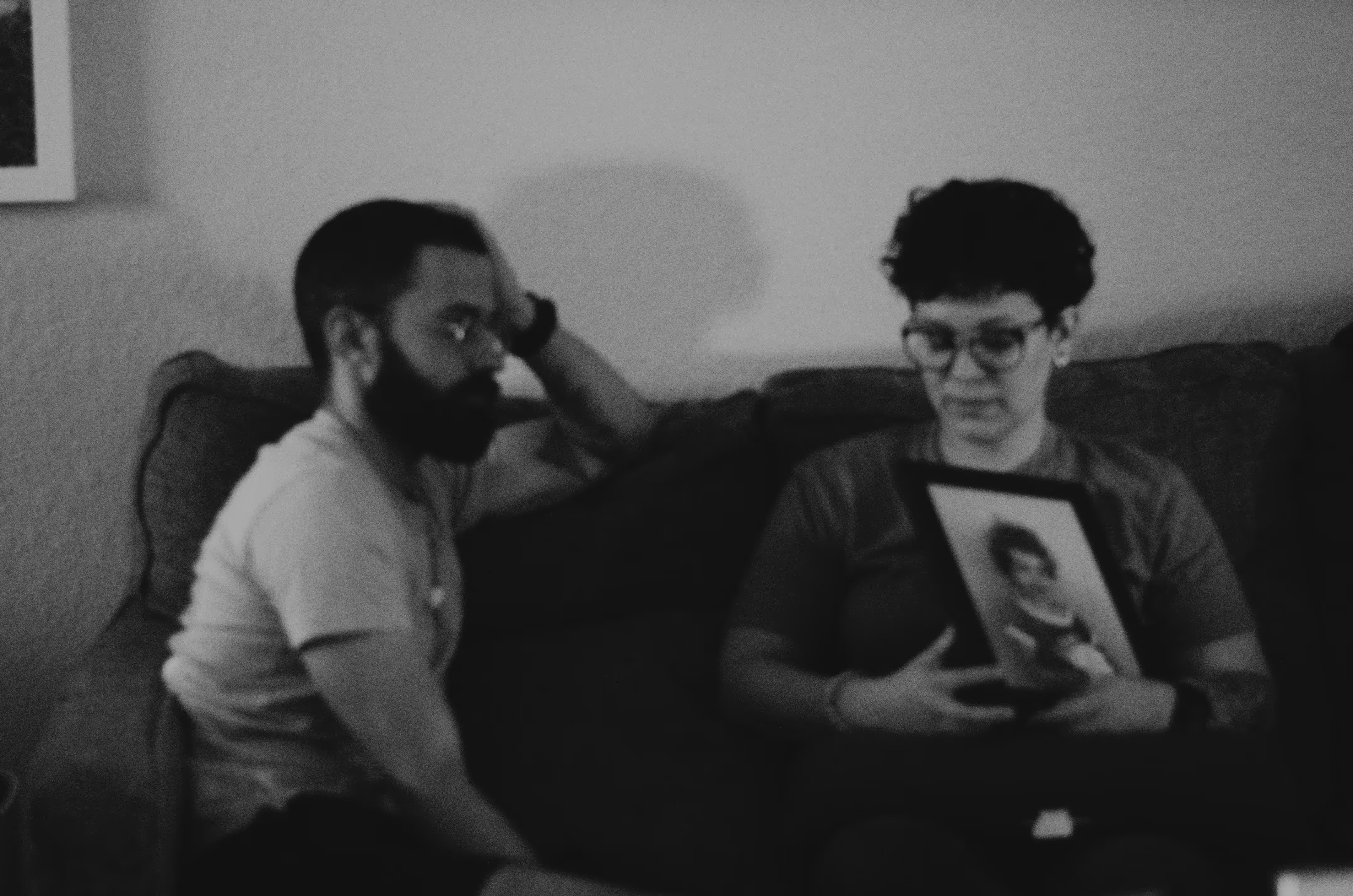
We’re still learning how to grieve. We text during the day if we need to, but if he’s having a good day, I don’t want to pull him into my black hole. Right now, it feels like we’re grieving separately.
Grief is exhausting. I deal with it by staying busy. But I know that drains Darline. It’s hard because what helps me doesn’t help her. Sometimes I worry she thinks I’ve moved on or that I’m further down the road toward acceptance. But I don’t know any other way to do this. It’s what I did while Brooklyn was still here – just kept going. Maybe I’m good at hiding it. I do a lot of grieving in the car, too. I drive several hours a day, alone. So that’s when I cry. People think I’m doing better, but I feel just as much pain. That’s how a lot of dads are. We just express it differently.
I know he hasn’t forgotten Brooklyn. I know how deeply he loves her. But I still wonder how he’s able to keep going. He tries to get me outside, but I just want to lie in bed. I’ll go out for five minutes, and then I’m right back in. Some days I wake up and remember she’s not here, and it ruins everything. Then it turns into stress and migraines. Work can be triggering, too. I probably went back to pediatrics too soon. So when I get home, I lie in bed. I don’t know how to cope.
People will say things like, “Your child wouldn’t want you to live like this.” But that’s not helpful. It feels like judgment. If she is watching us, I hope she knows we’re doing the best we can.
The hardest part of grief for me is that it shows up out of nowhere.
With no reason. If something triggers it, fine. But when I’m just sitting in traffic singing a song, and suddenly a horrific memory hits? Why? I just want to learn how to deal with the emotions when they hit. I’m not trying to suppress everything, but we need tools to handle it a little more easily.
"Grief is a monster. But I also don't want it to go away."
We just wanted her to have a normal life. She didn’t even get to start school, and she was so excited about it. We got her a little backpack. There are so many kids who don’t get to experience school, or even lose their first tooth. We take so many things for granted – graduating, getting a license, going to college. Just normal kid stuff.
We did meet with a counselor at a children’s hospital nearby who specializes in bereaved parents.
She told us, “I’m not here to diagnose or prescribe. I’m here to listen.” That made me feel so much better. Maybe she can help us through this and understand each other’s grief better. Because right now, we only have each other. Brooklyn was everything. Our whole world.
Grief is a monster, but I also don’t want it to go away. I’ve come to see it now as unexpressed love. And I was supposed to love her forever.
Have you found ways to stay connected to Brooklyn?
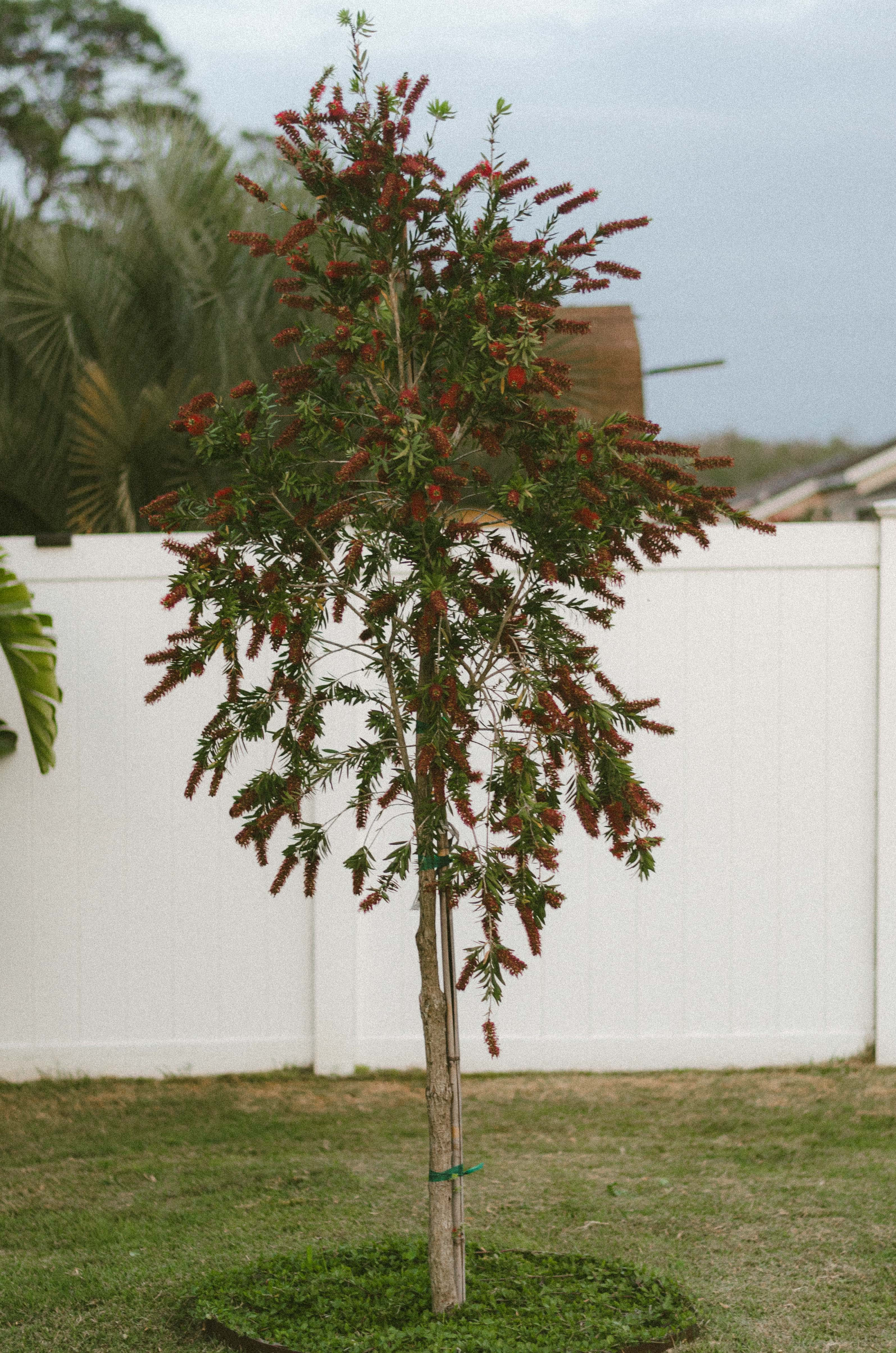
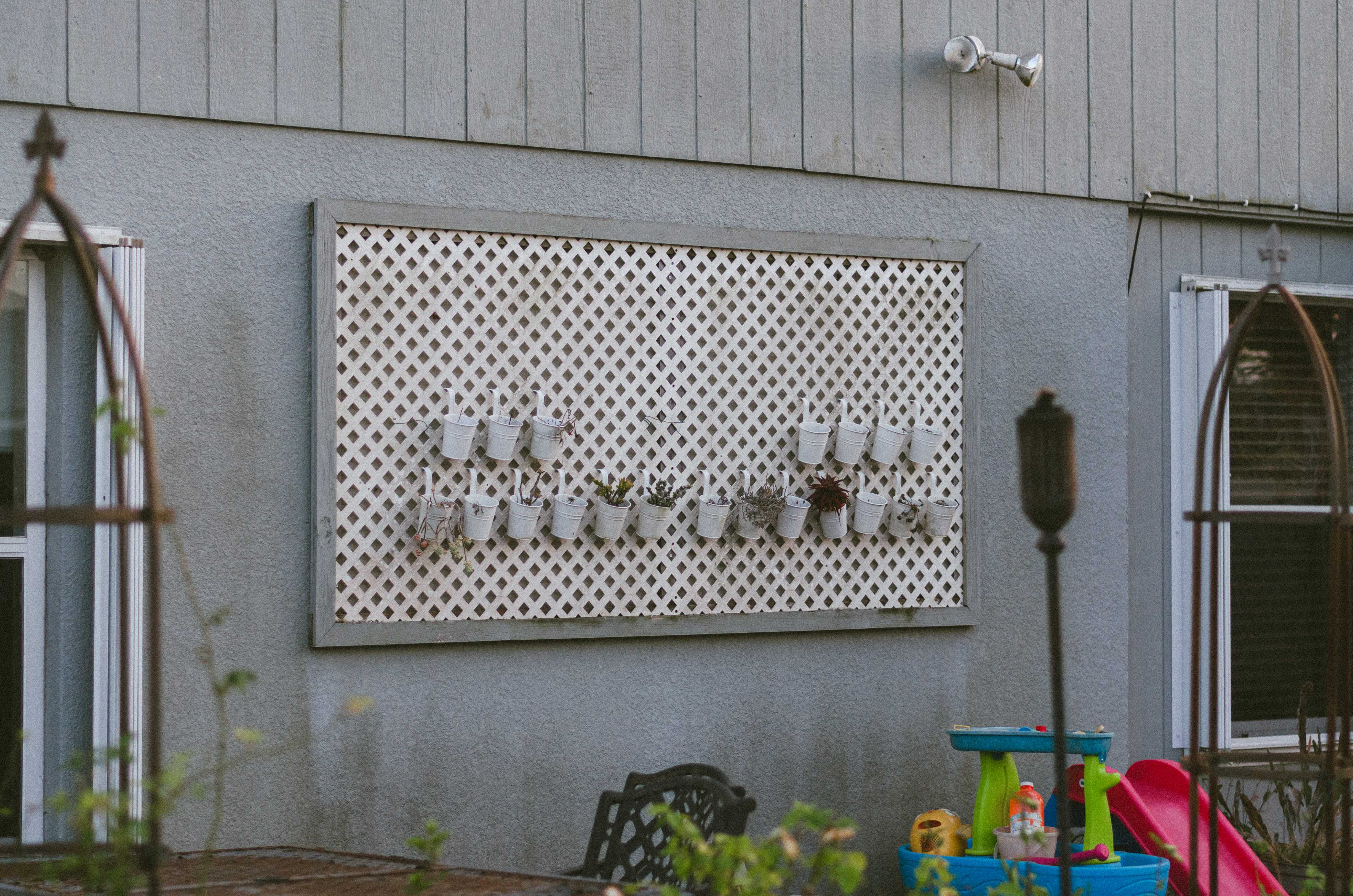
At a grief retreat last September, a medium started reading a group of four kids. Brooklyn was the first to come through. She disappeared for a bit while he read the others, but eventually came back. He said, “There’s something about a garden – something that started when Brooklyn was physically here and still makes her feel connected.” He said she kept saying she helped Daddy.
Then came all the details about her garden and her home. She loved planting flowers with you.
It was her safe space. She loved her room and the backyard. In the hospital, before she passed, she kept saying, “I want to go home.” But we couldn’t take her back.



"She wasn't afraid at the end."
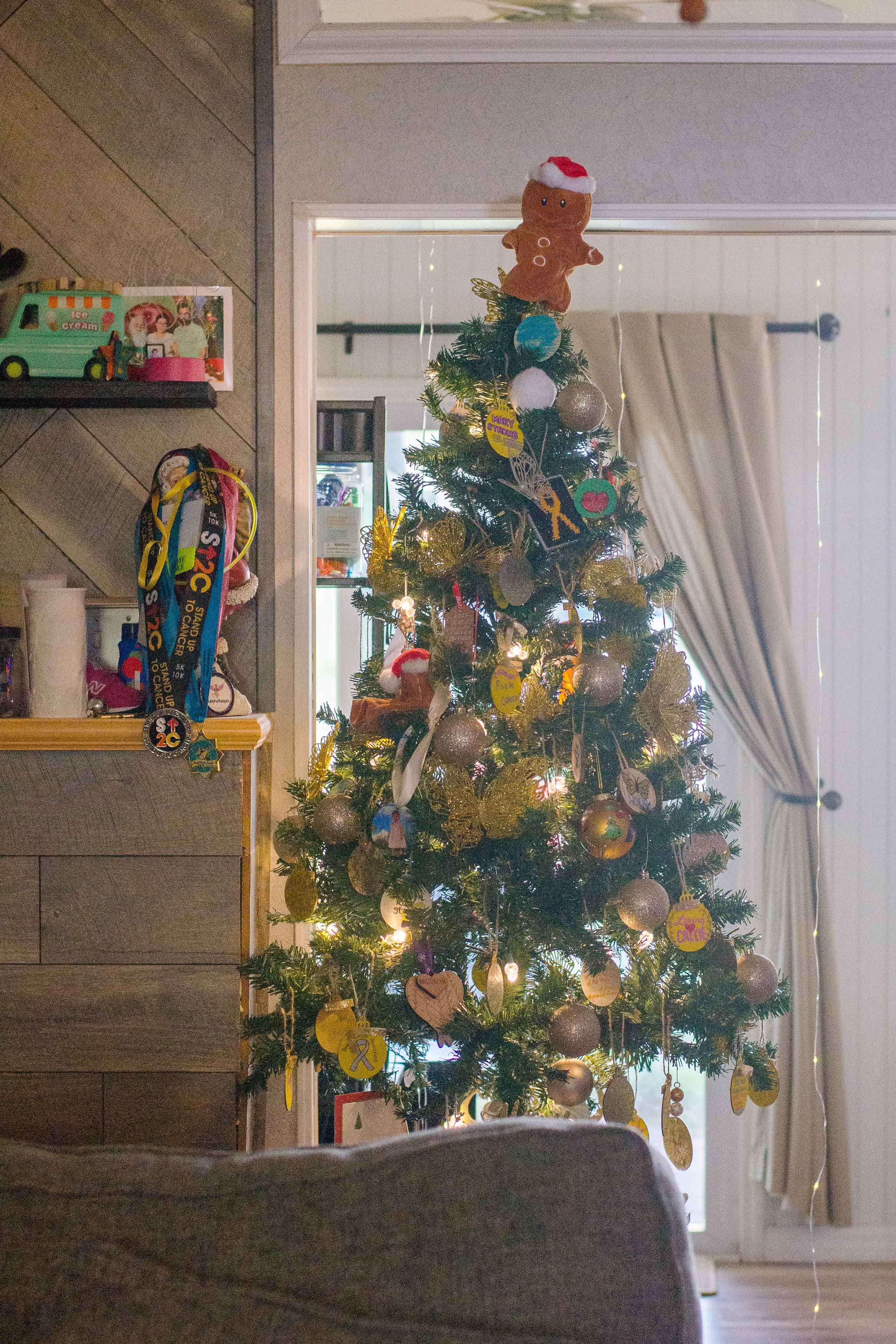
The medium also brought up snow. Brooklyn had experienced snow for the first time during one of our final visits to St. Jude. She was so happy. Then he said, “Now she’s pulling Christmas decorations out of boxes.”
It felt like a message. The day before this, I literally said I didn’t want to decorate. Christmas was Brooklyn’s favorite, but I just wasn’t feeling up to it. Then the very next day the medium says, “Brooklyn says you have to decorate.”
That reading meant a lot. We were afraid nothing would come through. But the first thing the medium told us is what every parent in this situation needs to hear: “She wasn’t afraid at the end.”
The medium said she was with her new best friend – another child who passed from DIPG. We hoped he’d say a name, but he didn’t. When your child has a disability, you want them around other kids like them so they don’t feel different. Brooklyn never got that chance while she was with us, so it meant a lot to hear it from him.
What do you wish people would ask you?
People are afraid to ask about Brooklyn because they think we’ll get emotional. Of course we will – she’s our daughter and she died. But we want you to ask about her. We want you to understand that she lived, she breathed, she fought. I wish people would ask us to tell them about her. Any proud parent wants to talk about their kid. I still want to talk about her.
"We want you to understand that she lived, she breathed, she fought."
Bingo. Talking about our child is not going to make us more upset than we already are. Don’t be afraid to say her name. We want to hear Brooklyn’s name. Don’t be afraid to bring her up. I heard something once that really resonated: you die twice – once when you actually die, and again when people stop saying your name. So sometimes I wonder: when we pass away, who will say her name then? There’s nothing a grieving parent wants more than to talk about their child.
Also, if you’re planning something with kids, don’t decide for us. Please invite us. Let us decide if we can handle it.
We’ll probably say no, but being asked matters. I know that most people never know someone who’s lost a child. But that doesn’t mean it should be so taboo to talk about. In the beginning, I was furious at what people said and how they acted. But now I've realized, I used to be that person. So maybe if you haven’t been through this but someone in your life has, ask how you can support them. Ask how you can help them feel seen.
Some of our relationships have definitely shifted. You start to realize which relationships actually matter. Lorenzo’s one of those people for me. I talk to him every day. He makes life feel normal. And we’ve also made new connections with other bereaved parents.
What advice would you share for parents going through something like this?
There’s a saying: “In twenty years, no one will remember that you stayed late at work – except your children.” It’s true. It’s easy to get distracted with work and with life. But being there and saying “I love you” matters. You can’t say it enough. Children need to hear it.
And remember that you’re not alone. There are support groups and people who dedicate their time to helping newly diagnosed families. We didn’t take full advantage of that, and looking back, it would’ve helped. Also: advocate for your child. It’s vital, especially with DIPG where treatment approaches often feel cookie-cutter. Keep pushing. Don’t settle for the first explanation a doctor gives you. You’re doing your best for your child. But don't stop asking questions.
"Remember that you're not alone."
Many doctors haven’t even heard of DIPG.
Right. It’s not that they know nothing, but it’s limited. You have to be your child’s voice, especially when they can’t advocate for themselves. And for families newly diagnosed with DIPG, there’s a resource not enough people know about called the DIPG Navigator. The navigators are nurses who help you research clinical trials. They do the heavy lifting, figure out what your child qualifies for, and explain it in a way you can understand. It takes some pressure off you during a crisis.
"Know what's best for your child - not what's best for you. And try to have hope. It's all you have."
And another piece of advice: when it comes to decisions, there’s no right one. We were told the only wrong choice is to do nothing.
If your child is bedridden and the end is near, that’s one thing. But when they’re still walking and functioning, there is no right or wrong. We beat ourselves up, but we were doing the best we could.
And know what’s best for your child – not what’s best for you. We wanted her with us, but not at the cost of her quality of life. We had to let go of our instinct to hold on so that we could do what was best for her. And try to have hope. It’s all you have.

What would you say to people in power?
If you took your child to the hospital and were told there’s nothing they can do – that you have six months left – how would you feel? How would you use your power to change that? We’re launching rockets into space, yet there’s kids being diagnosed every day with a terminal illness. And for DIPG, something we’ve known about for decades, there’s been no real progress in 30 years. What are you going to do to change that? We want to get involved, starting at the state level. Florida’s supposed to be good about allocating research funds.
"We’re launching rockets into space, yet there’s kids being diagnosed every day with a terminal illness."
We have to get rid of all the bureaucracy. Kids make up 25% of the population, yet only 4% of funding goes to childhood cancer. Some say it’s gone up to 8%, but that’s for 200 different types of cancer. In the past two years, the number of DIPG cases per year has doubled. Two years ago there were roughly 300 cases a year – now it’s around 600.
And what’s really frustrating is hearing that institutions hoard data. If they worked together, maybe they’d make progress. But instead, they sit on their own notes.
"We’ll talk about her forever. It won’t bring her back, but maybe it will raise awareness."
We’ll keep fighting, though. And advocating. Brooklyn was our world. We built everything around her. We’ll talk about her forever. It won’t bring her back, but maybe it will raise awareness. Because I’d hate for another mom to go through this.
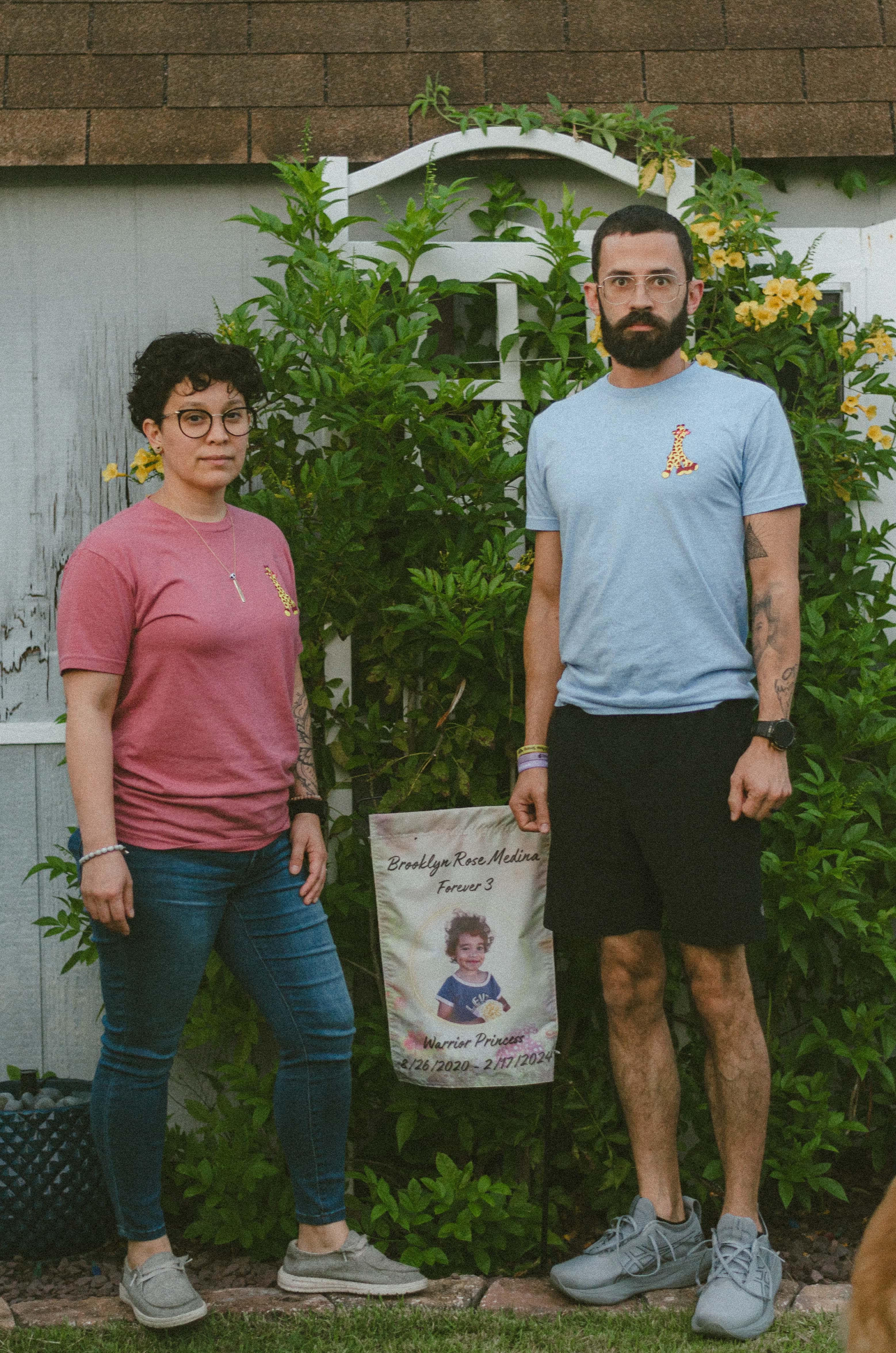

Brooklyn's Petals of Hope
If Brooklyn's story moved you, please consider supporting the work Darline and Anthony are doing in her memory.
Brooklyn's Petals of Hope is a pediatric brain cancer foundation dedicated to families facing DIPG and DMG — two of the most aggressive childhood brain tumors. Darline and Anthony built it from what was missing during Brooklyn's diagnosis: meaningful support, resources, and community alongside the medicine. The foundation formally launched in early 2026 and supports families in four ways: direct financial assistance and practical help during active treatment, memory-making moments of joy for children still fighting, grief support and remembrance for bereaved parents, and education and advocacy to raise awareness of pediatric brain cancer.
Donate: https://www.zeffy.com/en-US/donation-form/brooklyns-petals-of-hope-general-fund
Visit the Foundation: https://brooklynspetalsofhope.org/home