
Science is moving forward without us.
The opportunity to participate in research is often not given, for a whole host of reasons. And that’s what I’m working against — one person at a time, one caregiver at a time.
— Karen Peterson, triple-negative breast cancer survivor

Karen Peterson was treated for Stage I triple-negative breast cancer in 2015. When it came back as Stage IV two years later, survival at the time was approximately eight to thirteen months. Karen was offered standard treatment, but she wanted care based on her tumor's specific genomic profile. She did her own research, showed up unannounced to research labs, and found a clinical trial that, at the time, wasn't even listed on clinicaltrials.gov, but was an early lead for a new treatment study. It saved her life. As Karen put it, “I was told the trial had a 4 percent chance of working. And here I am, talking to you, looking at rabbits, seven years later.”
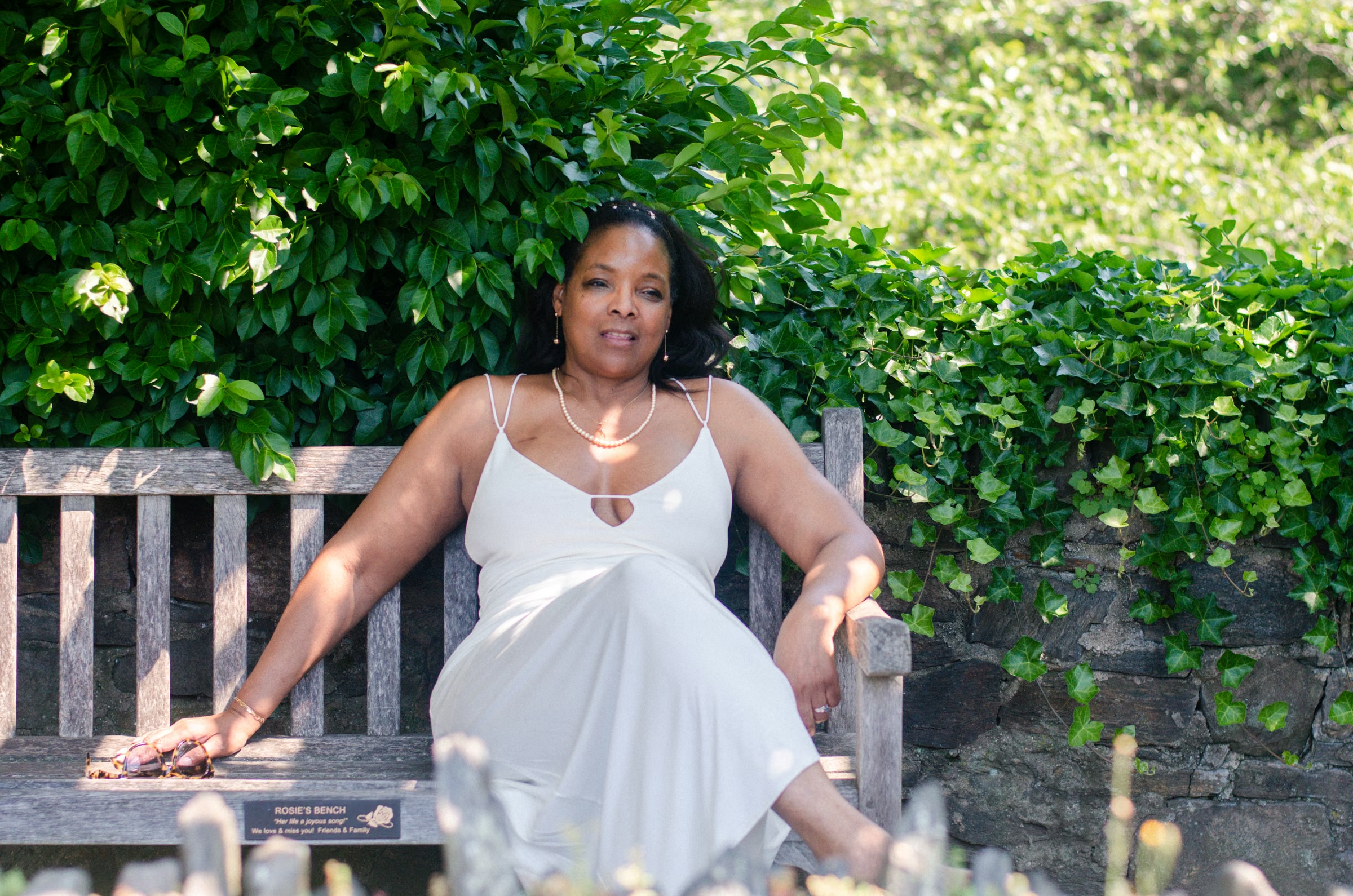
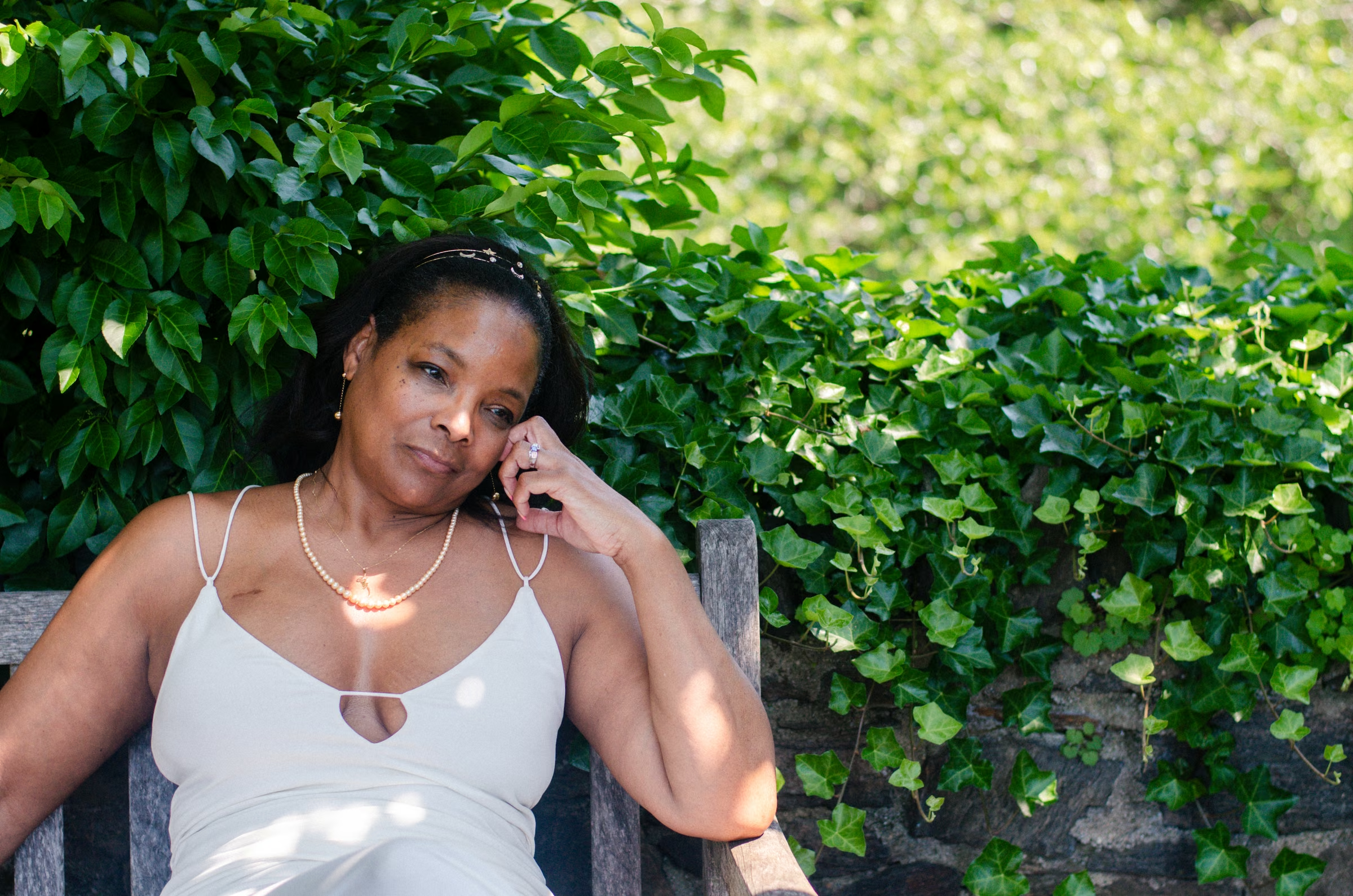
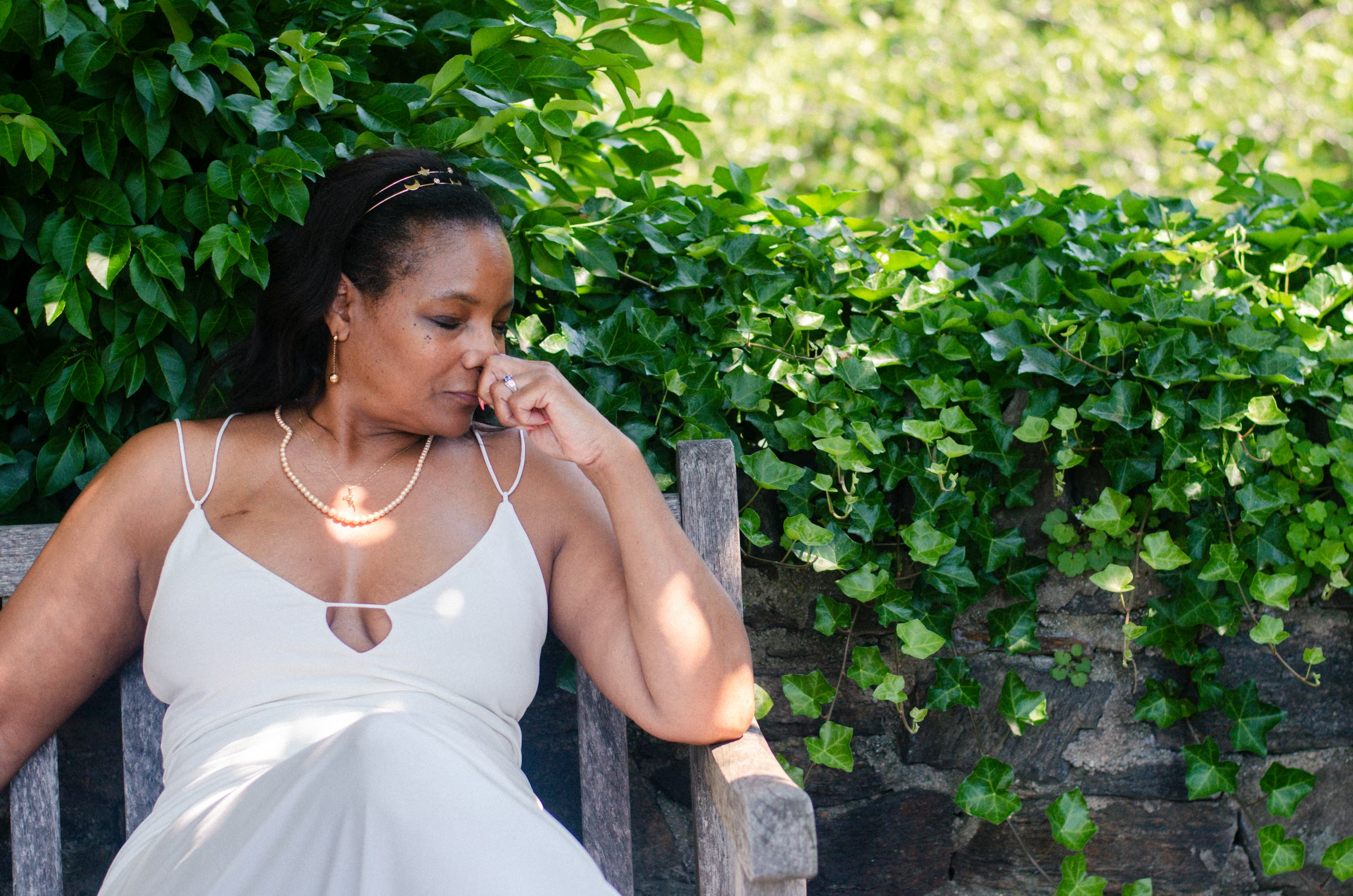
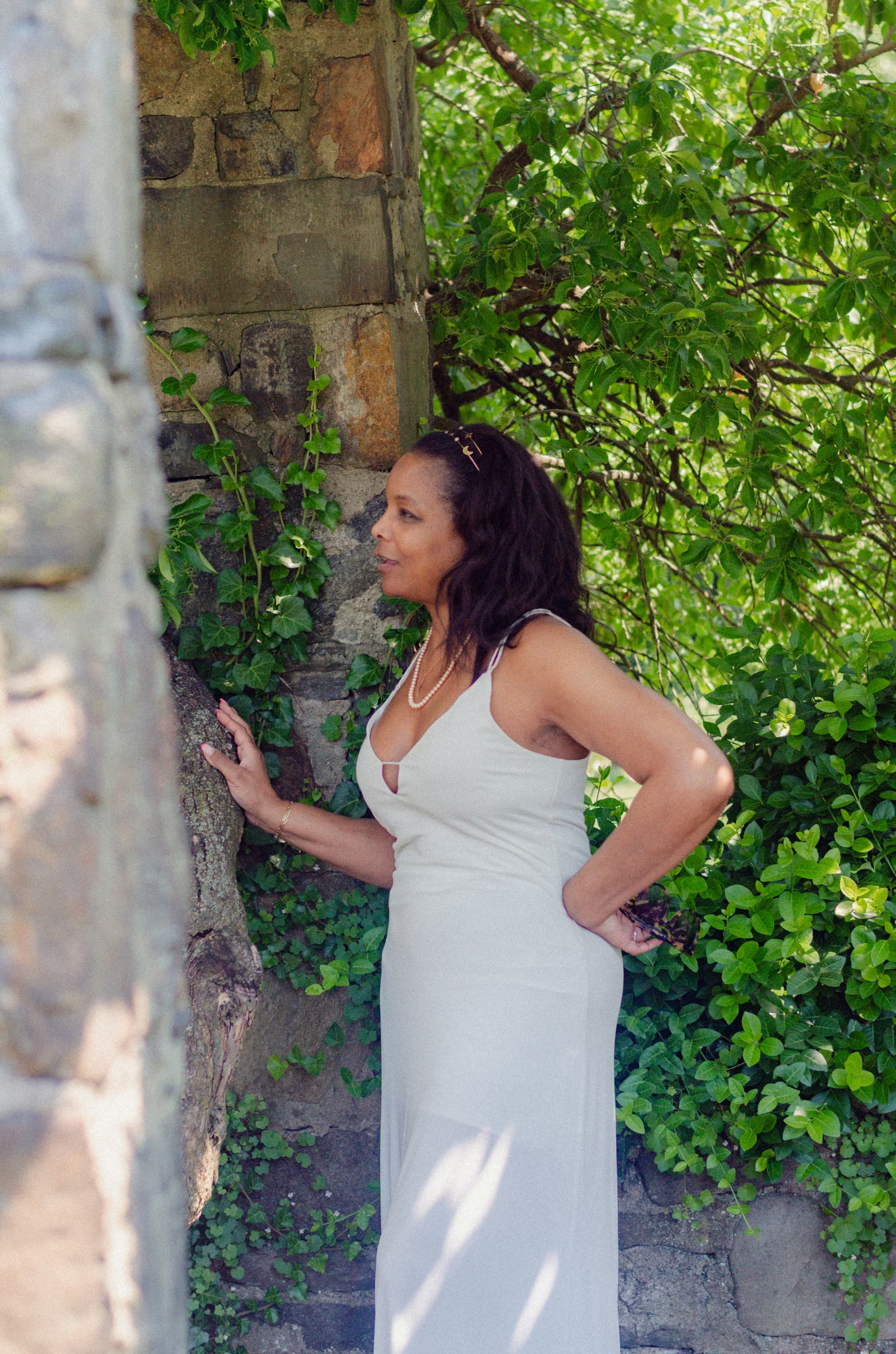
In June 2024, we spent a day with Karen at Wave Hill Public Garden & Cultural Center in the Bronx, the borough where she grew up. The following story comes from our conversation that day. It does not cover where Karen has been since.
I'm an introvert. If I'm in a room with a lot of strong energy, I'm always asking myself: What can I add here? What value do I bring? I'm not just running my mouth. I think introverts have the best sense of humor. Because we observe everything. The only time I'm not an introvert is when I can't be.
These days, I'm invited into rooms where it's just the one percent. The doors are closed, the news media isn't there, and they're having conversations. I can sit in those rooms because I can look the part. But underneath all that is someone who knows exactly what it's like to not be valued — to stand in the grocery store and figure out what you can afford. I've always been with the underdog. I was a social worker in New York City before this. I'm most comfortable being with regular people.

My childhood wasn’t a place where you had time to be sad.
I grew up in a single-parent household. My mother worked two jobs, and I had responsibilities: pick up my sister from school, figure out dinner, choose the right route home, clean her scrapes, put on the bandaid. I was constantly making choices. Whose house are we going to? Whose mom is cooking tonight? Which friend said they needed extra homework help? I was always on. Never off. As an adult, I’m off now, and I take full advantage of it.
I went to public school off of the Grand Concourse in the Bronx. I was always very smart, but I played down my intelligence to fit in and survive. If we had a book report, I would practically write the whole book.
I was the middle child – the problem child. If we were about to do something we shouldn't, I was the point person – the one who thought through the escape route. Sneaking into movie theaters through the back door was our thing. I'd be the one asking: What door will work? What time does the guard arrive? When does he take his break? How big is the door? What floor? My friends had the initiative and the muscle. I had the details.
The Bronx in the 70s was a beautiful place, because it was community. You knew everybody's father and mother in the building. They watched out for you and had no problem telling you things – tie your shoe, lower your voice, break that up, pick up that candy wrapper. You can't do that now. Today you mind your business and leave it to the parents. But back then, it truly took a village. That's the era I grew up in.
Before I was born, my mother lost an 18-month-old son to Wilms tumor. When I came along with similar symptoms, it was traumatic for her. I was three, going on four. I was so little so I had no idea what was happening, but I knew something was wrong. I remember telling my mother I had a stomachache. My brother was too young to verbalize his pain. I was a little older and could. That's what saved my life.
My mother never talked about what she went through. She lost her own mother at 44 to breast cancer and metastatic ovarian cancer. Then she lost her 18-month-old son. She was 20 when all of this happened. Then there was me. To have all of that happen so early in life — it was tremendous. And mental health wasn't something talked about in our community. You had to be strong. You had bills to pay, a family to raise. "Self-care" and "therapy" were words my mother did not benefit from. So she suffered through those traumatic experiences on her own. As an adult, I can understand my mother better, and I give her grace and space. But I struggled with it for a long time, especially as a teenager and young woman.


He said, “If you get caught, don't tell them it was me.”
In 2015, I was treated for Stage I triple-negative breast cancer – and experienced a lot of medical bias. I was ready to divorce myself from cancer and reinvent my life. I went back to school and graduated with a degree in coding. Shout out to the New York Public Library for teaching me how to code! My idea was to build a healthcare app — something that would bring together all the services supporting breast cancer patients in New York City: artists, sound bath practitioners, skincare specialists for radiation burns, yoga instructors, aqua aerobics instructors – whatever your position in that ecosystem. Part of building it was gathering insight — interviewing people, blogging, learning how the whole ecosystem worked. And the more I dug, the more I wanted to go straight to the source.
I had heard there was a physician who was doing work on triple-negative breast cancer. He was the leader of a teaching institution in New York City and oversaw all clinical trials. I wanted to talk to him. I didn't have an appointment, so realistically I was thinking, why the hell would he see me? I'm just a normal, everyday person. But I put on my little skirt and some heels and I showed up. There was a security guard at the door. I told him: "My name is Karen. I don't have an appointment. I want to go upstairs and see the doctor.” He looked at me like I had lost my mind, but he let me up. He said: "If you get caught, don't tell them it was me."
I took the elevator up, hit the lab floor, and walked past people in white coats. They stared at me, but they didn't stop me. I followed a lit corridor to the end, saw a light in an outer office, and walked in. The doctor's assistant jumped up and said: "How are you even in here?"
The doctor could hear me through the open door. His assistant looked at him like she should call security. He said, "No, don't call security." Instead, he cleared off his desk, took off his white coat, and sat down. He had a beautiful view of the East River. I walked in and said: "I hear you're doing research on triple-negative breast cancer. I want to know why you can't cure this thing. And why aren't more Black women involved?"
He pushed back, and what he said has stayed with me ever since. "Where do you think we get our patients from? They don't fall out of the sky. We get our recommendations from oncologists. If the referrals aren't coming — if Black patients aren't participating — it's not because we don't want them. I'm just the researcher. The oncologist is the gatekeeper. Take those questions back to your oncologist."
As I was leaving, he said: "If you ever want to come back to the lab, I got you." I think about that a lot. He probably hadn't spoken directly to a patient in years. And here I was, in a skirt and heels, asking him why he couldn't cure this thing. Something landed.

I committed to being intentional, and I was ice cold about it.
A year or so later in January 2017 – not long after completing breast reconstruction surgery – I went to my quarterly oncology appointment and took the normal blood test.
My oncologist said there was "something funky" on my levels. I didn't care. All I was thinking was, “I gotta go get this job.” I needed to become a software engineer. But she recommended I take a CT scan. I was not happy. I said no. I ended up taking it – belligerently. It revealed areas of activity. She said I needed a biopsy.
I started to really think things through. My previous diagnosis was Stage I, Grade III. I had already learned through my own research that Grade III means the cells don't look like themselves – they’re wearing Halloween costumes. They're impersonating something else, but they're trying to kill you. They’re more aggressive and more likely to return in the first two to three years after diagnosis – especially for triple-negative.
I was at a fork in the road. Even without a confirmed diagnosis, I had to decide: how do you want to do it this time, Karen? Do you want to be educated? Do you want to be more in control? Do you want quantification? Do you want to make an informed decision based on actual science? Or do you want to do everything emotionally? There's no judgment in doing things emotionally – there’s no guidebook for this. But I’ve been belligerent in my delivery before, and people only saw the anger — the accusations, the disappointment, the hurt. They never actually heard me. As I've grown and matured, I've learned to calm my delivery, and be articulate and intentional with my words. Only then does the other person actually let me into their perspective.
So I made those vows to myself. I committed to being intentional, and I was ice cold about it. I didn't have time to mourn. I said, you ain't got time. Looking back, I wasn't very kind to myself. But the clock was ticking.
I took the CT scan in February and the biopsy in March. I started sneaking into more labs, walking up on researchers at fundraisers, corralling people at medical symposiums. I was trying to learn as much as I could about clinical research and how to use it to make an informed decision about my own health.
One of the researchers I met was at Carol's Crusade for a Cure in March 2017. This was before I even had a confirmed diagnosis. She handed me her card and said, "God forbid you ever need it. But I want you to know: it's all about time. If anything happens, you have to act quickly. You have to think about research quickly, and not wait. There's standard of care and then there's research, and you should be able to entertain both conversations at the same time."
Around this time, I found a story online about a woman who had been diagnosed with triple-negative breast cancer at Stage III, and had gotten into a clinical trial just six weeks after diagnosis, which was unheard of in 2017. She was a hustler like that.
I reached out. I said, “I need you to come across the water. Let me take you to lunch.” She came. I took her to a tiny restaurant called Lido’s. I told her what was happening. She said, “I'm sorry to hear that. Talk to me. What’s your plan? What are you doing?”
She ended up explaining Phase 1, Phase 2, and Phase 3. I didn't know what they were. She said, “in Phase 3, you're guaranteed standard of care, but you aren't always guaranteed the experimental drug within the first 12 weeks. So you have to be able to survive that window.” According to the data, I didn’t have 12 weeks. So she said, “You want a Phase 1 trial, because you're guaranteed the drug.” That made sense. I thanked her and moved on.
At this point, five people in my life knew what was happening. My best friend. My sister. My friend Wally. My son's aunt. And my new friend who’d explained the trial phases. They held me accountable. Every single day, I had to report to them that I had done something intentional that day. When I got up in the morning, they’d ask: How’s it going? Who are you calling today? Who’d you call yesterday? What did they say? Did you fax so-and-so your paperwork? I had to account for my time — and the time had to be spent saving my life.

I felt empowered, even though I felt stripped.
In April, I took my plan and everything I had learned back to my original team, which turned out to be the last meeting I had with that oncologist. That meeting was contentious. Thank goodness I recorded it.
When I got there, I could see her hesitating before reading the diagnosis, because patients usually break down at that moment. But I had already prepared myself. I said, "I just need you to read what's on that paper so we can get this meeting started." And she did. She confirmed a Stage IV diagnosis, but denied me access to everything I needed to make an informed decision.
I remember asking them – not even knowing the right words – “Should I have my tumor tested?” The team said no. They recommended carboplatin, a chemotherapy, because research showed that people with a BRCA mutation respond to it. I said: “That’s not my phenotype. We don’t know that. You’re basing my treatment journey on someone else’s? No. The stakes are too high.”
She said, “We should exhaust all standard conventional care, and if that doesn’t work, then we can think about the things you’re talking about.” That’s when I said, “Wait. I’ve been diagnosed with Stage IV, Grade III. There are no FDA-approved treatments for triple-negative breast cancer except chemotherapy (it was 2017). And you want to start with the thing that already didn’t fully work?” I was playing chess. I wanted to hear her recommendations and her answer on genomic testing before I let on what my second opinion had planned.
She asked if I had been talking with someone. I said yes, I had a second opinion. The conversation changed completely. She asked what they said. I told her that in order to make an informed decision, I would need genomic testing, the biopsy results, and a tumor mutational burden score. She said, "That's really expensive – where are they going to send it?" That's not what you say to someone who's been diagnosed with a deadly disease. How do you know I can't do a GoFundMe? How do you know I don't have a rich uncle?
That oncologist couldn’t quantify specifically how she was going to save my life based on my particular tumor makeup, my case, my history. It was all broad strokes. That's not precision oncology. That's not what researchers were telling me when they were willing to have a conversation. Those researchers didn't call security. They said, here's a woman who sounds like she knows what she's talking about. Let's talk. And I'm very thankful for that.
I asked her to gather all my paperwork because I was leaving. They gave me everything, and I haven’t seen her since. I stood outside the office and took a photo of myself on my phone, for historical purposes. I still have it somewhere. I remember looking like I had been scraped of everything that was wrong – and at the same time, scraped of any trust. Just a blank slate. That's what you would have seen on my face. It was a beautiful moment. I felt empowered, even though I felt stripped.
When people ask me if I experienced medical bias, my answer is yes. Because had I been her mother, her sister, or her best friend, she would have done exactly what I asked and sent me for genomic testing. Remember the researcher who warned me the oncologist would be the gatekeeper? He was right.
That year, the survival for Stage IV triple-negative breast cancer was approximately eight to thirteen months. I had no time to sit with my emotions. Time was the variable. I went back to the doctor - my second opinion - who introduced the concept of biomarker testing and using the results to guide my decision making. Once I received my results, I sent my information to the doctor I’d met at the fundraiser. Subsequently, I learned it was too early in my metastatic journey. My tumors (in my lungs) weren't measurable enough yet – they needed to be larger. So I moved on, and kept looking.
“No, that’s not how science works.”
The clinical trial I eventually joined hadn’t even been listed on clinicaltrials.gov yet. I found Dr. Cho through my own resilience and research.
He called me and said I didn’t qualify for the trial I’d reached out about – an immunotherapy for people with a PIK3CA mutation. Mine was PIK3R1. I figured my mutation started with the letter P, so that was close enough. He said, “No, that’s not how science works.” But he had a trial coming down the pipeline that I might be a good fit for, and he asked if I was interested. He did caution me that less than 15 percent of women with this type of breast cancer responded to immunotherapy, and that I had a 4 percent chance of survival, but he was able to quantify and clarify why he thought the drug would work for me. He was very specific. So I accepted the challenge of moving forward with screening for exclusionary criteria and a physical.
I joined the trial on June 30th 2017. Dr. Cho said, "I'm now going to pass you off to my team." I got upset. I had an attitude about it. In my mind, the clinical trial was me and him. Just the two of us. I mean, I back-doored my way to him. And suddenly there was a whole team? He said, "I'm the principal investigator. I can't sit here with you all day. I have a team." I really thought it was just me and Dr. Cho. We spent weeks having conversations together. But behind him there was a whole team. And they were excellent.
His team came in and introduced themselves: a clinical nurse, a social worker, a nutritionist. They gave me their cards. The clinical nurse said, "If anything happens to you and you go to an emergency room somewhere else, give them this card — it explains the drugs you're on." That card was a lifeline. I kept it in my wallet for two years.
During my first infusion, they couldn't get a good vein, and I wouldn't do another port. I asked for an experienced nurse – somebody who'd been around the block. She came in, looked at my chart, and said, “You're in a lot of trouble.” But I didn't get upset. I didn't get angry. I just said, “Yeah.” Calm as anything.
Every three weeks I received an infusion of two drugs — IL-2 and a PD-1 inhibitor. For 72 hours after each infusion, I was completely down for the count. All I could do was get up to use the bathroom and put a spoon in my mouth. I was lucky to have my "Mary Poppins from the Bronx" – a woman who took care of my son during those hard days, because I could barely take care of myself. My ex was my primary support. We’d still curse each other out, but he'd come to make sure I was fed, that I was good, that I was alive. After three days, I would pop up like a jack-in-the-box and be completely functional for two weeks. Then the cycle would repeat. The IL-2 caused my skin to peel — specifically the skin under my eyes, so I looked like a raccoon. My lips would peel too. That roller coaster went on for a year.
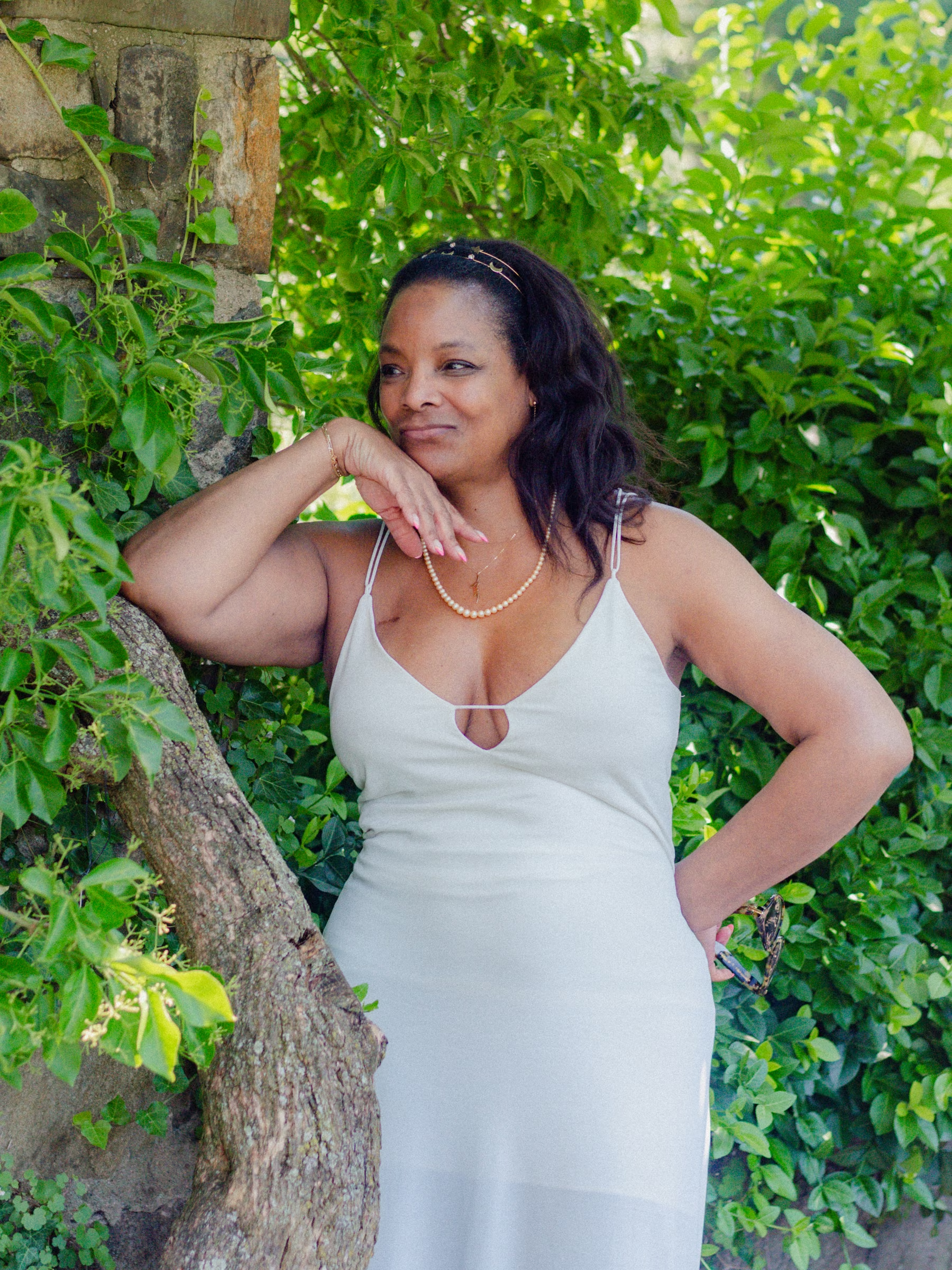
"Karen, I have some news."
Eight weeks after joining the trial, I went back for my very first CT scan. This was September 2017. I was nervous as hell sitting on that exam table. Dr. Cho rolled in, sat down on his rotating chair, turned to the dual monitor, and said: "Karen, I have some news." My heart was pounding. He said: "Your scans show a 72% reduction in your lesions."
I didn't say anything. The room was completely quiet. He could see I was in shock. He turned the monitor toward me and showed me the before and after. He said: "You see the difference? It's healing itself. Let me show you your lungs. Look at your ribs. The bone is healing itself. The immune system has kicked in. The fighter cells have their swords. And now the cancer — it's done."
I was still in shock, just listening. And then he looked at me and said, "Do you understand what I'm saying?" And I broke down. I cried for the first time. I hugged him. He was very buttoned up, very no-nonsense, but he let me hug him, then gently stepped back and left the room.
A nurse I had never seen before — and have never seen since — came in. She was on the clinical side. She was tearing up. She said to me: "You know, this doesn't normally happen for us." I didn't fully understand what she meant at the time. I was still in shock. Then she said it again: "This is us." She was Black. I understood. But I didn't yet know the full weight of it. I didn't know I was probably the only African American on my trial. I didn't know how much we as a community don't participate in clinical research. Looking back, I think she had been rooting for me from afar. She was always there to bear witness when the stats came back. To this day, I believe it was divine intervention.
I had my 53rd birthday while I was on trial. I didn’t know if I would make it to see it. But I did, so I celebrated. I went to a hole-in-the-wall in the Bronx and threw back some bottles. The problem: infusion day was the Monday right after. I went in on Monday and, as casually as I could, mentioned to Dr. Cho that I'd had a birthday party over the weekend. He got up and left the room. He didn’t say a word. He just left. He was calling the pharmaceutical sponsor to authorize proceeding with the infusion despite the elevated readings. My nurse came in and told me the doctor had to get on the phone and it would be a while. I made my way down to the infusion suite, grabbed a warmed blanket and waited. The wait turned into an hour delay! I sat there knowing exactly what was happening. They gave the go-ahead. But it was close. I never repeated that mistake.
After a year on the trial, Dr. Cho and I agreed to come off the IL-2 and continue on the PD-1 inhibitor. The scans stayed stable. Then, four months before the trial was scheduled to end, I voluntarily came off the PD-1 inhibitor too. My reasoning: if you progress while on a drug, that drug is off the table forever. But if you come off voluntarily and later need to reach back for it, that option remains open. So I played chess again.
In the research graph, I appear as an asterisk. I'm the only line that goes straight across — flat, no progression — from day one. The annotation reads: "Patient received all the clinical benefits she could possibly receive in her 20 months on trial, and voluntarily came off." Seeing that flat line and knowing it's me – it’s a beautiful thing.


He was the perfect doctor for me.
Dr. Cho wasn't the doctor for everyone. He was no-nonsense, Hollywood-camera averse, and indifferent to pen-and-paper documentation. But he was the perfect doctor for me. There are very few photos of him — he was like Bigfoot. But I have one. I'm holding a balloon that says "Thank You" on the anniversary of the day I joined the trial. He hated that kind of sentimentality. He let me take the picture, and I could tell he was tolerating it. I cried like a baby when he told me he was leaving NYU. But then I said to myself, “He was there when we needed him. Now he needs to be somewhere else for someone else. Don't be selfish.”
He gave me three recommendations for follow-up physicians. Not one of them was a breast oncologist. All three were research oncologists. One was a melanoma specialist. His Freudian slip to me once — and he didn't say it in a way that I was supposed to retain it, but I did — was, "Your cancer doesn't behave like breast cancer." So he recommended a melanoma specialist and I'm like, okay, I'm following the breadcrumbs.
The things he taught me, he didn't realize he was teaching me. That's the standard I go by now. I had a man who'd studied this his whole life, and for two years he'd say, “We've got to get your immune system back in the game,” and then explain exactly what was going wrong. Normally you get diagnosed and nobody gives you the metaphors, the ins and outs of what's going awry. They talk to you about proteins. What does that mean to a normal person?
When I'm on TV or quoted in articles, I know Dr. Cho has seen it. And I know he still thinks about the fact that I quoted him saying he was going to put my immune system "on crack" and give it "some gasoline." He said that off-the-cuff to explain what the drugs were going to do, and I thought it was brilliant. I quoted him at my first speaking gig and he was mortified. The camera operator in the background was laughing. When he heard about it he said, "I can't believe you said that." My response: "That's literally what you said." I don't think he's used that metaphor with a patient since.

I went one way. She went another.
When I found out my trial was working, I wasn't in a place to process it. A lot was happening. I remember having a lunch meeting with a television executive about telling my story, and I couldn’t explain what had happened to me. The interviewer said, "You have survivor's guilt." I didn't even know what that was.
I soon learned that my friend – the woman from New Jersey who had first explained the trial phases to me over lunch – wasn’t doing well. She had failed out of two trials. Doctors started calling me – researchers I had connected her with – asking if I'd been in touch. She was struggling. She would break down in appointments, crying so hard they couldn't get through the conversation. She couldn't retain the information. She couldn't move forward. I had always been that calming force for her. But there was only so much I could do from the outside.
I went to her appointment with Dr. Cho. She was hoping to get on the trial that saved my life. I remember sitting in the waiting room before we went in. She was crying. I had to tell her: "Pull yourself together before we go in, because you need to be able to retain what you're about to hear." Being able to silence everything — to hold it together, to stay completely still in a moment like that — comes from my tough upbringing. It's a strange thing to call beautiful, but it is.
She pulled herself together, and we went in. Dr. Cho reviewed her chart. It wasn’t good. She met the exclusionary criteria. She had been overly treated, so the window of opportunity had closed. It was a fork in the road that I'll never forget. I went one way. She went another.
I've been there before. Before 2019, before 2020, before the pandemic. I've been in the room where patients circle back to a trial, want to participate, and the exclusionary criteria kick in. And I've just had to sit there quietly as the doctor runs down the line. “Sorry, you're ineligible — you've been overly treated” or, “Sorry, you have a brain metastasis,” or, “Sorry, you have a comorbidity you didn't have 24 weeks ago.”
In 2017, there were no FDA-approved treatments for triple-negative breast cancer except chemotherapy. On my trial, there were 43 participants. Five of us responded. I was the only complete responder. You can no longer get what I had — that trial has closed. What I received was IL-2 in combination with a PD-1 inhibitor called Opdivo. Opdivo isn't marketed as a breast cancer drug, and the IL-2 I received never even made it to market — it failed its Phase 3 trials in other cancers. The exact combination that saved me is no longer accessible. And that's my whole point: I want people to think outside the box. That combination, for me, worked. I was told the trial had a 4 percent chance of working. And here I am, talking to you, looking at rabbits, seven years later.
As for genetics — I don't glow in the dark, surprisingly. I've been genetically tested twice: once around 2015, and again around 2018, when I was in the middle of my clinical trial. Both times, nothing. No mutations, nothing. My tumors genomically had all kinds of activity, but genetically — nothing. I find that very odd. Scientists have told me that science just hasn't caught up with what's going on with my family yet.

All hell broke loose when she found out.
I did not tell my mother about my Stage IV diagnosis until after I completed the trial and was doing well. After telling the first five people I'd been diagnosed with Stage IV – and watching them break down crying while I patiently sat there waiting for them to finish – I said to myself, “Oh hell no. I’m not telling anyone else. I don’t have time. I have a plan. I’m going to stay alive. I don't have time to explain the plan or internalize your feelings to help you feel better. I just don't.”
The moment I told her was right before the Essence Magazine article was about to come out. She has a subscription to Essence. I called her and said, "There's something I need to tell you before you open that magazine."
Apparently all hell broke loose when she found out. That’s at least what I heard from my siblings. It shocked her. And she put it together that the entire country practically knew before she did. It was suddenly just known, without ever really being spoken. But she never showed me any disdain or asked me why I didn't tell her. Not once.
Now, years later, my nieces are connecting the dots. They’re like, “Oh, so that's why you were missing for Christmas. That's why you weren't at that birthday party. That's why you seemed a little tired." I was able to continue most of my activities during the trial, but there were times I couldn't, and I never said anything. And now they can look back and finally understand.
My mom’s been supportive. She came to my Today Show appearance and has attended Karen's Club webinars, participated in educational programming, and read every article. But we've never once had a real conversation about my diagnosis. When she asks how I'm doing, I give her the clinical update — the objective facts — not the deeper layer. And I understand why. It’s just how we operate.
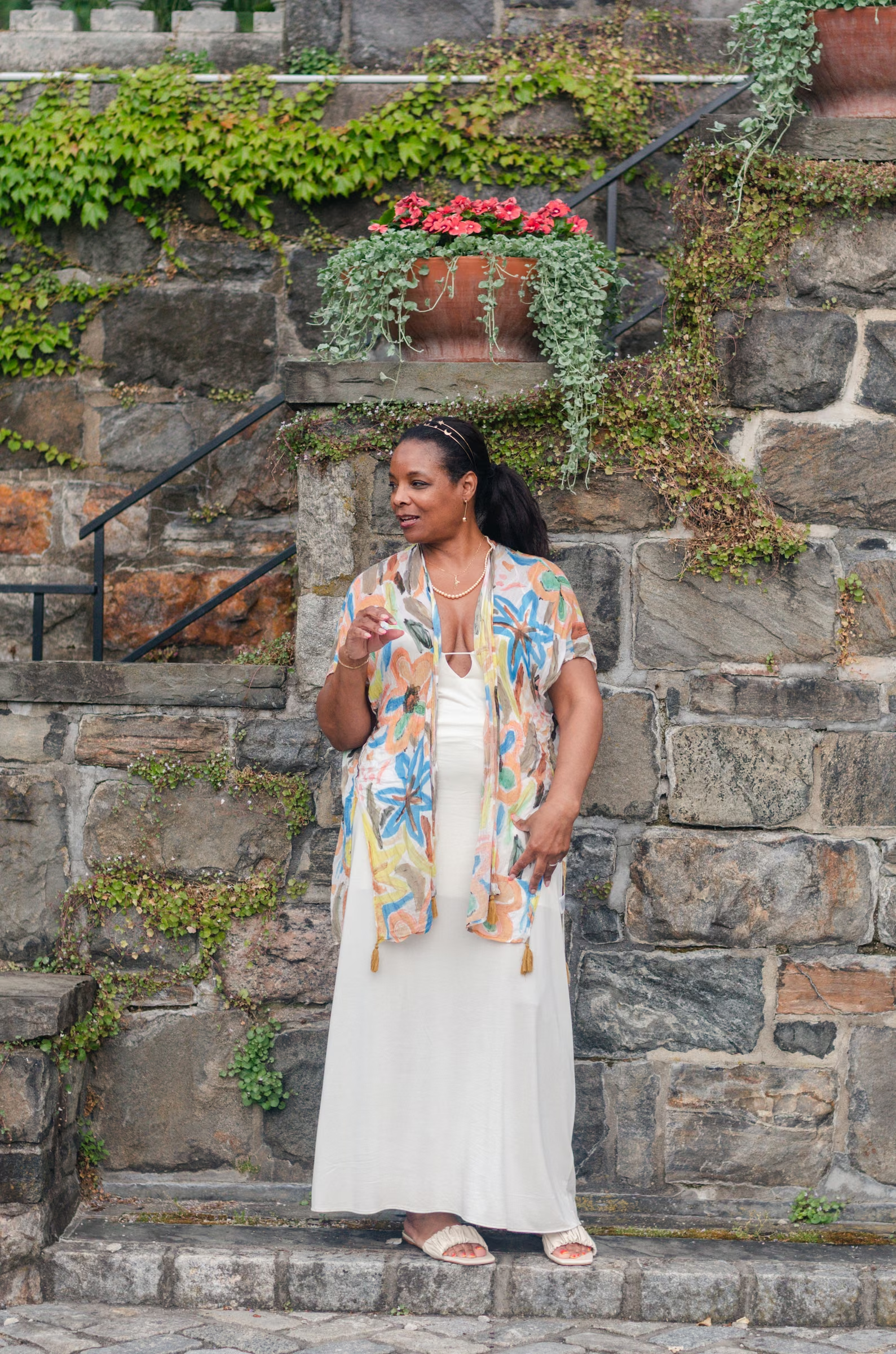
It was researchers who told me to keep going.
I did not plan to be an advocate. It was researchers – the ones who heard my story and understood the magnitude — who told me to keep going. They said: "Your average person doesn't understand what happened here. A researcher does. There's no way you should be here. Don't stop doing what you're doing. We need you to tell your story. We need you to inspire other researchers who don't have contact with patients. We need you to inspire other patients to see that clinical research is a viable, obtainable option."
Here I was, an African American woman. A skeptic with no formal science background – self-taught in a matter of weeks. I chose to push through my skepticism and focus on the solution: getting through the door. I chose to be open. I walked up to researchers, found other patients’ stories, and went after the scientific information I needed to make an informed decision. And I hit the lottery. It hurts my heart to see young mothers, young patients diagnosed with metastatic triple-negative breast cancer, who don’t have the same treatment outcomes I did. Every person I talk to wants to be in my seat. I want them there too. But the opportunity to participate in research is often not given, for a whole host of reasons. And that’s what I’m working against — one person at a time, one caregiver at a time.
Nurses have said to me: "You could have just ridden off into the sunset." And whenever someone says that, I'm taken aback. I don't ask a follow-up question – I just read the room and sit with it. They were basically saying, “You got the system to work for you. You could have just gone quiet. The fact that you didn't – that you stayed to give back – that was a choice.”
I've met the people behind my treatment. The researcher who developed the early IL-2 work – when I told him what I'd been through, he said, 'Luckily you didn't have a cytokine storm.' That's when your body turns against itself and doesn't stop. If mine had, as he put it, my fire would have been blown out. I also met the salesperson who sold the genomic testing to my second-opinion team — the product that helped save my life — and I even had an email exchange with the woman who produced the IL-2 I received. Those are the full-circle connections that come out of this work.
People often ask me, where did you get your inspiration? I didn’t know anyone directly at the time, but I found stories. There were four or five stories of people who'd gone through a struggle like mine and used the immunotherapy I used. They didn't have breast cancer – they had melanoma, lung cancer, and colon cancer. But they all used immunotherapy. And the stories were like mine: early disease that came back, no other options, trouble getting access — and somehow, someway, they got access. One was near death, I believe in New York City, and it was her sister saying, “Don't give up, don't give up.”
Another inspiration was a story in TIME. This woman was on death’s doorstep, but the PD-1 inhibitor worked. I remember thinking, “If she can do it…” And then a full circle moment happened. During one of my first speaking events after the trial – The People v Cancer – I was sitting there and realized she was, too. We were both on the panel together. The person who inspired me was right beside me.

We walked in like we owned the place, and everyone was looking.
Have you ever been to the New York Auto Show at the Javits Center? That's what ASCO (American Society of Clinical Oncology) looks like, but on a much larger scale. Pharmaceutical companies have these exhibition halls. Talks, education centers, open forums, poster board sessions – along with free food, coffee, ice cream, and packed crowds. It was a lot.
This friend of mine, a patient advocate from Virginia, says, "I've got this party you should come to. I want you to come with me." I said, "Yeah, okay." Then I asked, "Do we have invites?" And she goes, "No, but we'll be able to get in." Mind you, this wasn't just any party — it was an actual fundraiser. I found out later that table captains were responsible for $10,000 per table. There were three families in there who lifted their paddles and gave a million dollars each. We had absolutely no business being there.
So we get to the door and someone says, "I'm sorry, we don't have your names." My friend goes, "No, no, no." The girl at the door was young. She said, "I like your energy. We need a little rah-rah." She put us at table 43 in the back. I guess they looked at us and thought, they look appropriate, let them in.
We walked in like we owned the place, and everyone was looking. I put my jacket down and went to find my friend. She had wandered up to the front. I was pushing people out of the way saying, "Excuse me, excuse me." I found her and said, "You need to come back here. This is where we're supposed to be." We sat down at a table. There was a woman next to me — an ex-model, I don't know who she is exactly — and she said, "So, how's your night?" I knew exactly what that meant. So my response was: "It went fantastic. I gave a keynote address at Gilead this morning, and I'm really thankful to be a patient advocate and make sure that my voice is heard."
Then security comes over and starts talking to my friend. They ended up escorting her over to the table where the staff were sitting. Before they could put me out, I got up and moved back to our original table, and told the people there what happened. They were like, "This is the type of energy we need at these events. It's so bougie." When people came over and asked, "What department are you in? How long have you been here?" I just smiled.
We laughed the whole way back to the hotel in the Uber. The fundraiser itself was something — silk linens, gold cutlery, the whole spread. But beyond almost getting thrown out, my actual goal was to grab specific information I knew could be useful — information I could take home and study. For example, I didn't know there was a difference between conventional radiation and proton radiation. As a breast cancer survivor thinking about your treatment journey, that distinction matters. Proton radiation protects healthy cells in a way that conventional radiation does not — and yet conventional radiation is often the one that gets recommended. That's the kind of information I bring back to my community.
As I was leaving ASCO, people stopped me in the exhibition center to say: "I was in that audience. You resonated. You came across well. Can I talk to you?" I appreciated it, because honestly, I don't know how I come off — whether I come across as angry, passionate, or something else. I don't like to watch myself on video. There's one video I've never watched: my Today Show appearance. That's my only national performance, and I haven't seen it. I think it's because I had just come out of the trial. You'd still see the hurt and the angst. You’re also the first person I've let photograph me, outside of my sister. She's the one who's caught me at my most vulnerable, and in my recovery.
I said, "No, that's not the right question. What can you do differently?"
Now, seven years later, I'm bringing other people's stories into this work, not just mine. I'm bringing what patients are telling me, what they're dealing with, what they're talking about. I gave an example at ASCO when the moderator asked, "What can we do differently?" And I said, "No, that's not the right question. What can you do differently? Because you're already doing something." I said, here’s a story: I was working with a 40-something-year-old African American woman, a funeral home owner. She understands science – she works with it every day. My partnership was with one research facility, but she was leaning toward a different one – not because the science was better, but because of how they treated her. They had given her information ahead of time, and the space to absorb it and ask questions before she ever sat down with the research team. When she talked to me, she couldn't answer basic questions about her appointment at my partner facility, because no one there had given her anything beforehand. She was willing to risk her life and switch — not for the better scientific match, but because of her experience. Someone had handed her a hug and a brochure and made her feel informed. That's the difference.
The same way I engage with you is the same way I engage with an audience. I don't use notes or a script. I refuse. I tried it once and put it down immediately. Tell me who the audience is, what the takeaway points are, and I can go all day. I bring real examples from the community I serve — patient experiences, perceptions, education, why certain things aren't happening. That's the beauty of what I do. I can bring people with me who aren't in the room and still make it real for everyone.


When I talk to patients about their trial experiences in comparison to mine, most are shocked at the difference.
Most patients I meet are choosing between childcare, gas, and getting to their appointment. They're talking about having to make choices about spending $50 because they're traveling and then paying for valet parking — versus me going downtown, getting automatic valet, and getting reimbursed for it. I was choosing between nothing. I had carte blanche. I had a nutritionist, a masseuse, a social worker — all provided by my clinical trial’s sponsor. NYU was a well-oiled machine. I didn’t find this out until later, where I was one of very few patients in a room of pharmaceutical executives and researchers. I met a man there who said he had written a book about NYU’s clinical trial program. He said the experience I had was intentional – they built it that way.
Even when I lost my insurance — going from regular insurance to having nothing — NYU stepped in. Someone from the clinical team came to me in the infusion room and said: "We can see your insurance has lapsed. Here's some paperwork. We have an emergency fund." I signed the paperwork and didn't think twice. I didn't even know they had an emergency fund; they brought it to me proactively.
What I received in medication was probably close to half a million dollars worth of immunotherapy. Someone had to pay for that. The teaching institution covered the research budget. NYU's emergency fund covered the gap when I lost insurance. And when I eventually got the New York State Medicaid Cancer Treatment Program — a special Medicaid for people being treated for breast, cervical, colorectal, or prostate cancer under a certain income level, with only four registered providers in downstate New York at the time — they reimbursed NYU for everything. It went seamlessly. Not one social determinant of health went unaddressed.
The system itself needs to be interrogated.
I started Karen's Club officially in 2021. George Floyd had happened, and COVID-19 had happened. DEI had also come into the conversation. I'd been on panels since 2020, talking about how to move the needle — with advocates, researchers, pharmaceutical companies.
When the 2023 FDA snapshot report came out and I read it, my reaction was pure anger. Of the 55 novel drugs approved that year, two were breast cancer drugs. In those trials, Black patients made up 2.8% and 1.1% of participants. The drugs being approved increasingly aren’t being tested in populations that reflect us.
I thought that report was going to show progress. Never in the history of this country had we poured so much money into research participation for communities of color. Millions of dollars had been spent – education, marketing, messaging, outreach – all of it. And yet the numbers didn't move. Even if it was modest — even 7% — I would have seen it as a sign that the work was paying off. But it looked like we were doing worse. So I had to pause and ask myself: Is this just about patient perception and social determinants of health? Or is the system not built for us to participate? Because the math is not mathing. Science is moving forward without us. Whether we choose to participate or not, it is moving forward.
The system itself needs to be interrogated. I don't know what the systemic fix is. I will keep doing my part. But something is wrong, and it's beyond perception and education. Because it's not just drugs that work differently across racial groups – it's the systems. It's the infrastructure, the tests, the algorithms. Systems built on incomplete data sets that systematically exclude biological factors from communities of color.
For example, the kidney function test — a formula used to calculate eGFR, or estimated glomerular filtration rate — was found to be inherently biased toward African Americans. Because of how the test was built, Black patients were effectively ranked as having better kidney function than they did, which meant they could be listed up to roughly two years later compared to white patients. The formula had to be corrected, and patients already on transplant lists had to be re-evaluated.
I've heard from researchers off the record that in 2017, everybody was really competitive. They sometimes refused to refer patients to other facilities even when it would have been a better fit. In fact, one of the community-science grants I won with Mount Sinai and Stand Up to Cancer — one of its requirements was that the hospitals in New York had to work together. Columbia has to work with Mount Sinai, Mount Sinai with Montefiore. Everybody had to come together. Because that’s equity and inclusion.
There’s a perception I run into all the time with patients: "I don't want to be a guinea pig." When I'm consulting with a patient and this comes up, I don't lead with my story. I lead with theirs. I ask questions, I listen to their perceptions, I have an honest conversation. Only then do I bring in my own story, to show how I pushed through those same fears and got access to the tools.
Here's the thing: you can decide to not participate. That is absolutely your right. But your decision should be made with a full picture. The half picture is not knowing if you have access to the tools. The other half of the picture is not understanding the value of those tools even when you do have access. I try to bridge both.
Let me give you a concrete example. I had what are called fighter cells — CD8 or CD4 T-cells — in an unusual abundance. They were surrounding the cancer. But they were on a coffee break. They weren't doing their job. The cancer had taken advantage of that and started moving in. My doctor had two experimental drugs. The tool — genomic testing, tumor mutational burden score — confirmed that my fighter cells were crowded around but asleep at the wheel. The first drug gave them boots, swords, pistols — everything they needed to do their job. The second drug cleared the path for them. And that's exactly what happened. I'm alive because I had access to the test, because the test told us what the drugs needed to do, and because the drugs did exactly that. When patients hear it explained that way, something clicks. They start to think, maybe this isn't Frankenstein. Maybe this has value.
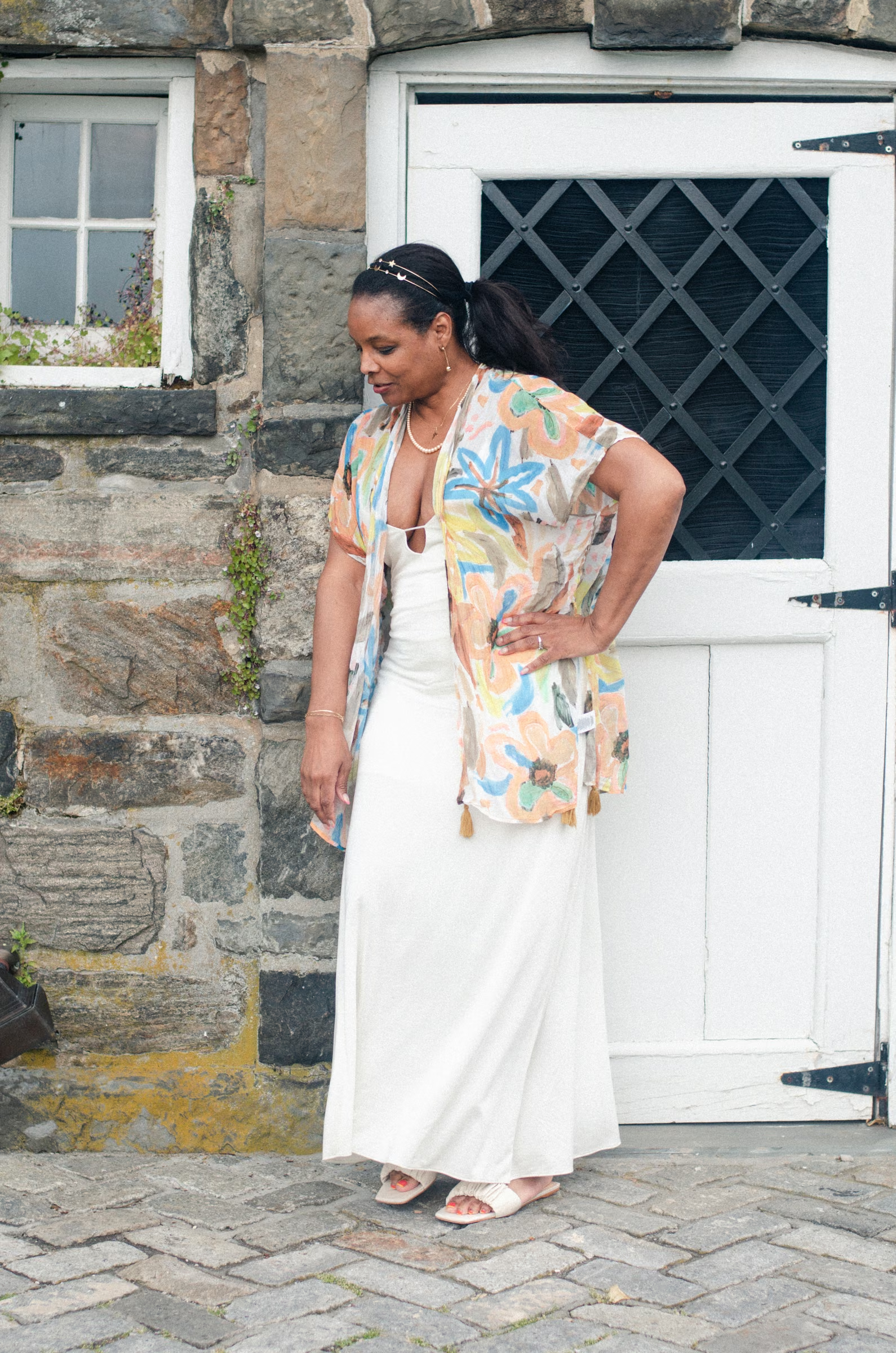
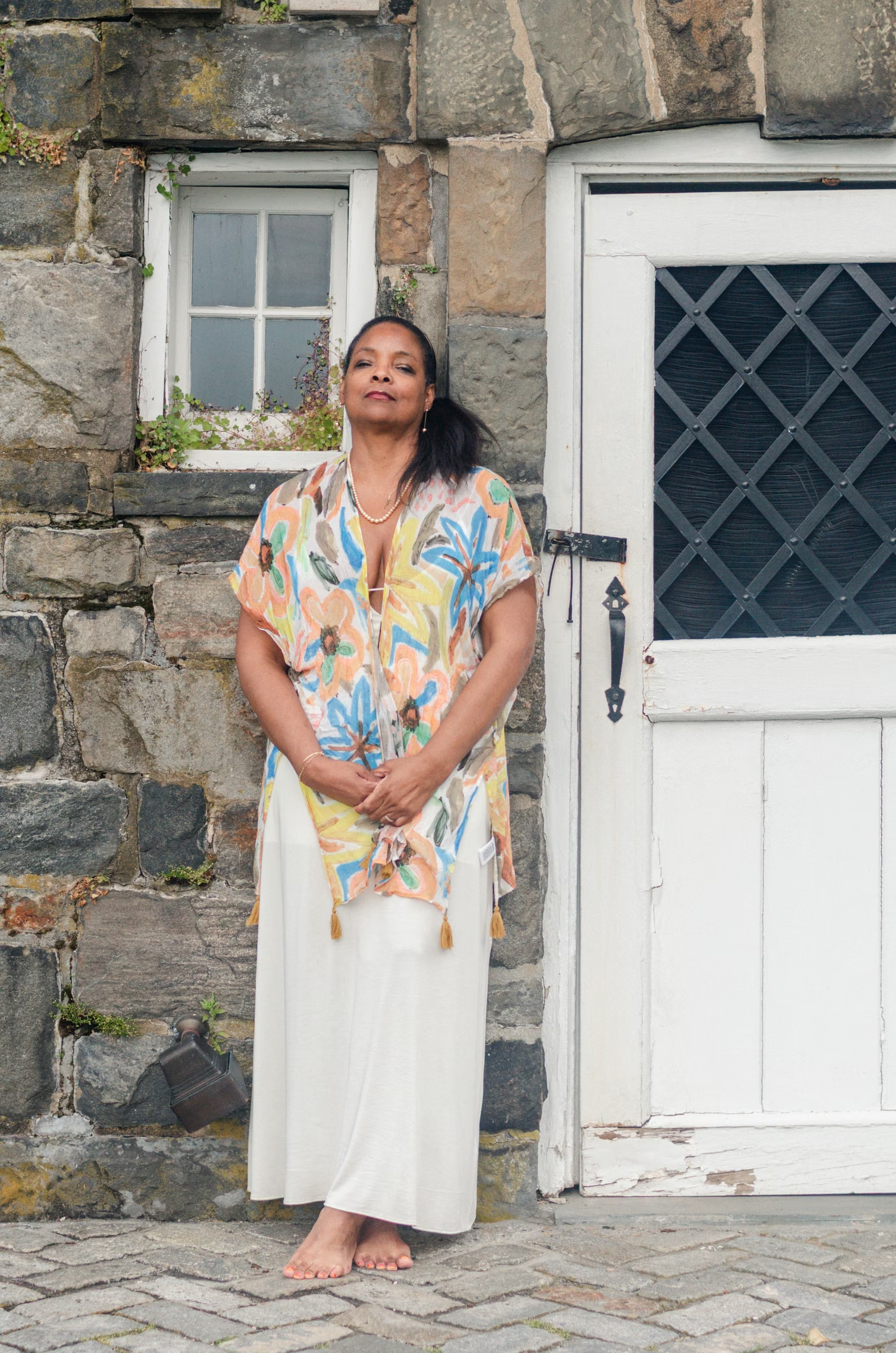
Do not go out there and do this alone just because I did.
People ask me all the time, "How did you know to do what you did?" And I always think about the Bronx. The escape routes. The details. I had people who knew what was happening, but they couldn't make the decisions for me. It’s a skillset I needed to develop: the ability to embrace making decisions, own them, and not let anyone else's influence dictate how I was going to move. I was alright with that. I was firm. I fully believe in mental health support and support groups, but I just didn't have time. But here’s my disclaimer: do not go out there and do this alone just because I did. I do not recommend that. It was right for me because I had specific circumstances. But I wouldn’t recommend it universally. Lean on your support group, your navigator, your church community.
A patient once said to me, “I don't want to know as much as you. I don't want to have to know it.” I didn't take offense – that’s exactly why she has me. And it’s why I feel so strongly about what I do. The doors are there. But some patients don’t know where to find them. Some can’t get past the people guarding them. Others don’t understand the value of what’s behind them, or they don’t trust the system. Others don’t know there are doors at all. There are many layers. So I ask questions. I listen.
I also know the difference between being a patient who chases the best-rated doctor on New York Magazine's list — that was Stage I me — and being a patient who chases the research, who values their voice, who asks their doctor directly: what scientific proof do you have that this is the right choice for me? Because your biological makeup should be the number one thing you're thinking about if you've been diagnosed with a late-stage disease. It’s as simple as that. A researcher told me recently that the future of oncology won't be organized by the kind of cancer you have. It will be organized by what's happening inside you, case by case. The precision oncology I had to fight alone to access in 2017 is where all of medicine is heading.
People have been asking about a book for a long time. What most people don't realize is that the real story here isn't Stage IV. Everyone thinks that chapter was the hard part, but it’s the first part – Stage I – that's the most emotionally difficult to write. And the most legally complex. The deeper question is: What's the purpose? Am I writing to make sure other patients don't fall into the same pitfalls I did? Am I writing to ensure people are held accountable? Or is it all of the above? That's the equation I have to solve alone.
This work changes you. I'm not as soft and sweet and kind as I used to be. But I've never been at such peace as I am right now. And I know that's the quiet before the storm. I'm preparing myself for whatever comes next, and I feel very calm about it.


This story came from a conversation between Karen and The Portrait Project in 2024. A lot has happened in Karen’s life since. Part II may come, in time.
Karen's advice for clinical trial caregivers
First: don't project your goals onto the patient. The position of caregiver is not about you. It's really about the person they have in their life — their loved one. Allow yourself space to acquire answers without pressure. You don't have to know everything right away. You don't have to suddenly become an expert.
There is enough information out there. Start with the medical team. If you need access to tests, second opinions, insurance navigation — there are navigators for that. There are different entities in this toolbox for different needs: information, tools, access. Don't feel like you have to do it alone. You don't have to. I wouldn't recommend it.
Find strength in numbers. Identify the support surface that works for you — whether that's a social worker, a support group, a patient navigator, one-on-one mental health counseling, art therapy, sound baths, whatever it is. Give yourself grace and space. And don't make knee-jerk decisions based on your own emotions or perceptions, because at the end of the day, this is the patient's journey.
If you're going to the doctor, have a notebook. Let your loved one ask the questions. Interject where appropriate. Take the information home. Review it together. And then move forward from there.
If the patient has a sound mind and can be involved in their own decision-making, let them be. Your job is to support, not to override. Unless you're dealing with a child, someone incapacitated, or someone who genuinely cannot make decisions — that's a different, special case, and it deserves its own approach.